
Most guides to the gold souk Dubai is famous for focus on history and photos. This one is about the buying itself: how to walk into one of the world's busiest gold markets, keep your head, and walk out with a piece you're happy with at a fair price.
First, Where and What Is It?
The Gold Souk is a covered market in Deira, on the old side of Dubai Creek. Hundreds of jewelers sit along its lanes, and window after window is packed with necklaces, bangles, rings, and bridal sets. It's part of the Old Dubai experience, alongside the Spice Souk, the abra boats, and the creek itself.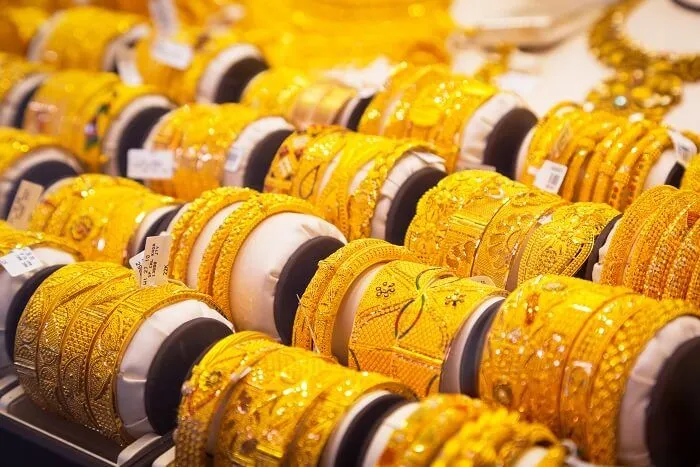
The souk isn't a single store. It's a cluster of independent shops, which is exactly why knowing how to compare is so valuable.
Is Gold Really Cheaper at the Gold Souk Dubai?
Often, but not automatically. Here's what tends to make gold competitive here:
-
Heavy competition: Dozens of shops selling similar designs keep pricing sharp.
-
Transparent gold rates: The metal is priced per gram on a daily rate, so you can check it yourself.
-
Lower or refundable taxes for tourists: Eligible visitors may be able to reclaim VAT on qualifying purchases.
What can eat your savings is the making charge, the fee for craftsmanship, which varies a lot between shops and designs. A low gold rate with a high making charge can cost more than a slightly higher rate with a lean making charge. Always judge the final total, not just one number.
The Buyer's Formula
Every price at the souk breaks down like this:
(Weight × daily rate for that karat) + making charge + VAT = your price
Here's an illustrative example. These are made-up numbers to show the logic, not current rates:
|
Item |
Amount |
|
20 g bangle in 22K gold at an assumed AED 300/gram |
AED 6,000 |
|
Making charge at an assumed 8% |
AED 480 |
|
Subtotal |
AED 6,480 |
|
VAT at 5% |
AED 324 |
|
Total |
AED 6,804 |
Now imagine two shops quoting the same bangle. Shop A charges 8% making, while Shop B charges 5%. On this piece, that's roughly AED 180 of difference before VAT. Multiply that across a bridal set and it adds up fast.
A Step-by-Step Plan for Buying
1. Do your homework at your hotel: Look up the day's gold rate for the karat you want. Knowing the number changes how you're treated.
2. Decide your purpose: Are you buying jewelry to wear, a gift, or an investment? This sets your karat:
-
Wearing daily: 18K or 21K holds up better
-
Weddings and gifts: 22K is the classic choice
-
Investment: 24K bars and coins carry little to no making charge, though they're not for wearing
3. Walk one full loop without buying: Photograph the pieces you like along with the tag details, then compare later.
4. Ask for the price in writing: Request the weight, karat, rate, making charge, and VAT on a quote or invoice.
5. Negotiate on the right thing: The gold rate is usually fixed, so bargain on the making charge or ask for a discount on the total, especially if you're buying more than one piece.
6. Verify the piece: Check the karat stamp, watch the item being weighed on a digital scale, and inspect clasps, joints, and finishing under good light.
7. Get the paperwork: Keep the invoice, any warranty or buyback terms, and certificates for diamonds or gemstones.
Red Flags to Watch For
-
No itemized invoice: A shop that only gives you a single lump-sum figure isn't giving you the full picture.
-
Prices that seem too good to be true: Gold isn't a secret discount item, so a suspiciously low price usually hides something.
-
Pressure tactics: Anyone rushing you or pulling you off the street with a "special price just for you" line deserves extra caution.
-
Vague answers about purity: A good jeweler is happy to explain the karat and show you the stamp.
-
Refusal to state buyback terms: If resale matters to you, ask what they'd pay back and what gets deducted.
What to Buy (and What to Think Twice About)
Good choices
-
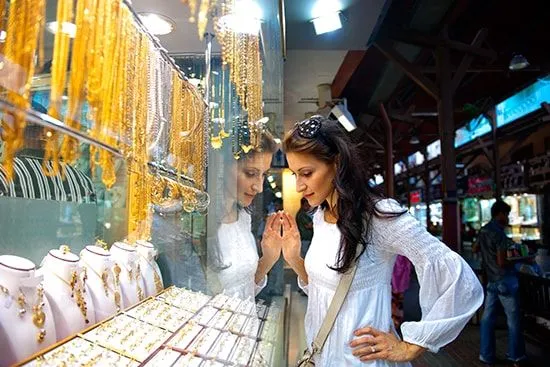
Plain gold chains and bangles: lower making charges and easy to compare
-
Gold coins and small bars: simple, portable, and easy to value
-
Classic bridal sets: a huge range, with room to negotiate on a larger purchase
Think twice about
-
Very intricate handmade piece: beautiful, but the making charge can be a big share of the price and rarely comes back if you resell
-
Heavily gem-set jewelry without certification: the stones may be worth far less than the price suggests
When Should You Go?
-
Cooler months (November to March): much more comfortable for walking the lanes.
-
Around shopping festivals: the Dubai Shopping Festival period often brings promotions, though dates change each year.
-
Time of day: late mornings are calmer for careful comparison, while evenings are busier and more atmospheric.
Opening hours vary from shop to shop, and some close for part of the afternoon, so it's worth checking locally.
Sample Half-Day Itinerary
-
Late morning: Arrive by abra from Bur Dubai and step off in Deira.
-
Midday: Walk the Gold Souk once through, taking notes and photos. Stop for lunch nearby.
-
Afternoon: Return to your top two or three shops, compare quotes, and negotiate.
-
Late afternoon: Explore the Spice Souk and the creek front.
-
Evening: Watch the souk light up, grab karak chai, and finish with the creek at sunset.
Taking Your Gold Home
-
Keep invoices in your hand luggage. You may need them at customs.
-
Check your home country's rules. Duty-free allowances for gold vary widely and can change.
-
Carry valuables on your person. Don't put expensive jewelry in checked baggage.
-
Ask about VAT refunds. Confirm whether the shop takes part in the tourist refund scheme and how to claim at your departure point.
Quick FAQ
How much money should I bring?
It depends on what you plan to buy, but many shops accept cards. Ask about payment methods and any card surcharges before you agree to a price.
Do I need to speak Arabic?
No. English, Hindi, and Urdu are widely spoken in the souk.
Can I get jewelry customized?
Yes, many jewelers can design or resize pieces, though timelines and costs vary.
Is the Gold Souk only for buying?
Not at all. Plenty of visitors come just to soak in the atmosphere, and shopkeepers are usually happy to let you browse.