

Introduction
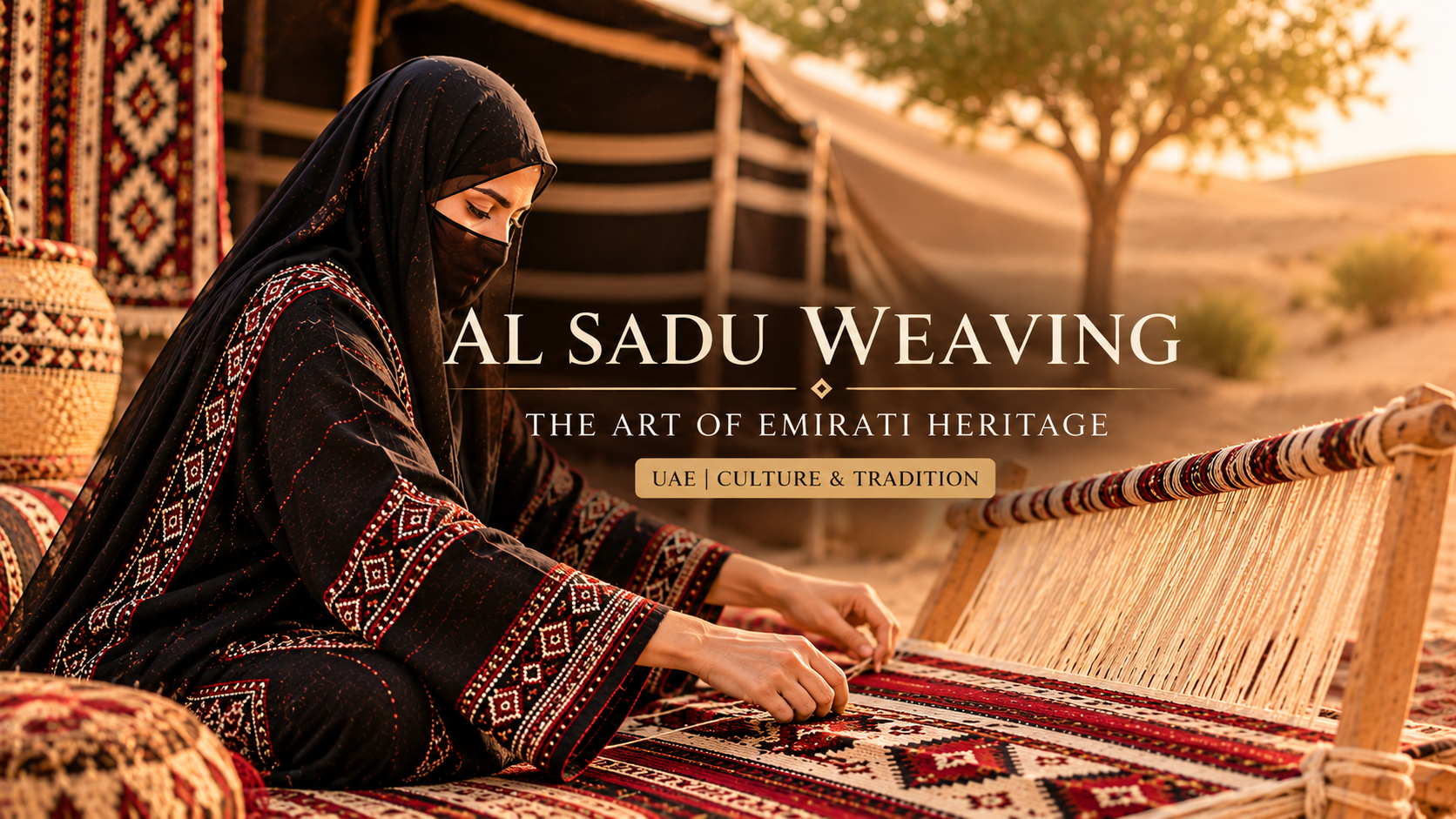
The United Arab Emirates is known for its modern cities, but its cultural heritage is just as meaningful. One traditional craft that reflects this heritage is Al Sadu weaving. Passed down through generations, this hand-weaving practice is closely connected with the life, skills, and identity of Emirati Bedouin communities.
What Is Al Sadu Weaving?
Al Sadu weaving is a traditional textile craft practised by Bedouin women in the UAE. It uses natural fibres from sheep, goats, and camels to make strong, useful, and decorative textiles. Traditionally, these textiles were used for tents, rugs, cushions, and decorative accessories for camels and horses.
The craft is more than a way to make fabric. It reflects the knowledge and creativity of the communities that have kept it alive for generations.
The History of Sadu Weaving in the UAE
Al Sadu developed as part of the nomadic Bedouin lifestyle in the desert. Families used materials available from their animals to create items needed for everyday life. Weaving was also a social activity: women often gathered to spin and weave, exchange family news, and share knowledge. Younger girls learned by watching experienced weavers and gradually taking part in the work.
To understand the wider cultural background of these traditions, readers can also explore AddressGuru UAE’s article on the history of the UAE.
In 2011, Al Sadu was added to UNESCO’s List of Intangible Cultural Heritage in Need of Urgent Safeguarding. In 2025, it was transferred to UNESCO’s Representative List of the Intangible Cultural Heritage of Humanity.
How Is Traditional Sadu Weaving Made?
The process requires care, patience, and skill. According to UNESCO, men traditionally shear sheep, camels, and goats, while women clean and prepare the wool. The fibres are spun into yarn using a drop spindle, dyed, and then woven on a floor loom.
Materials and Technique
Natural fibres such as wool and animal hair are used to make the yarn. The textile is created using a warp-faced plain weave, often arranged in narrow bands. This technique helps produce a durable fabric suitable for traditional uses.
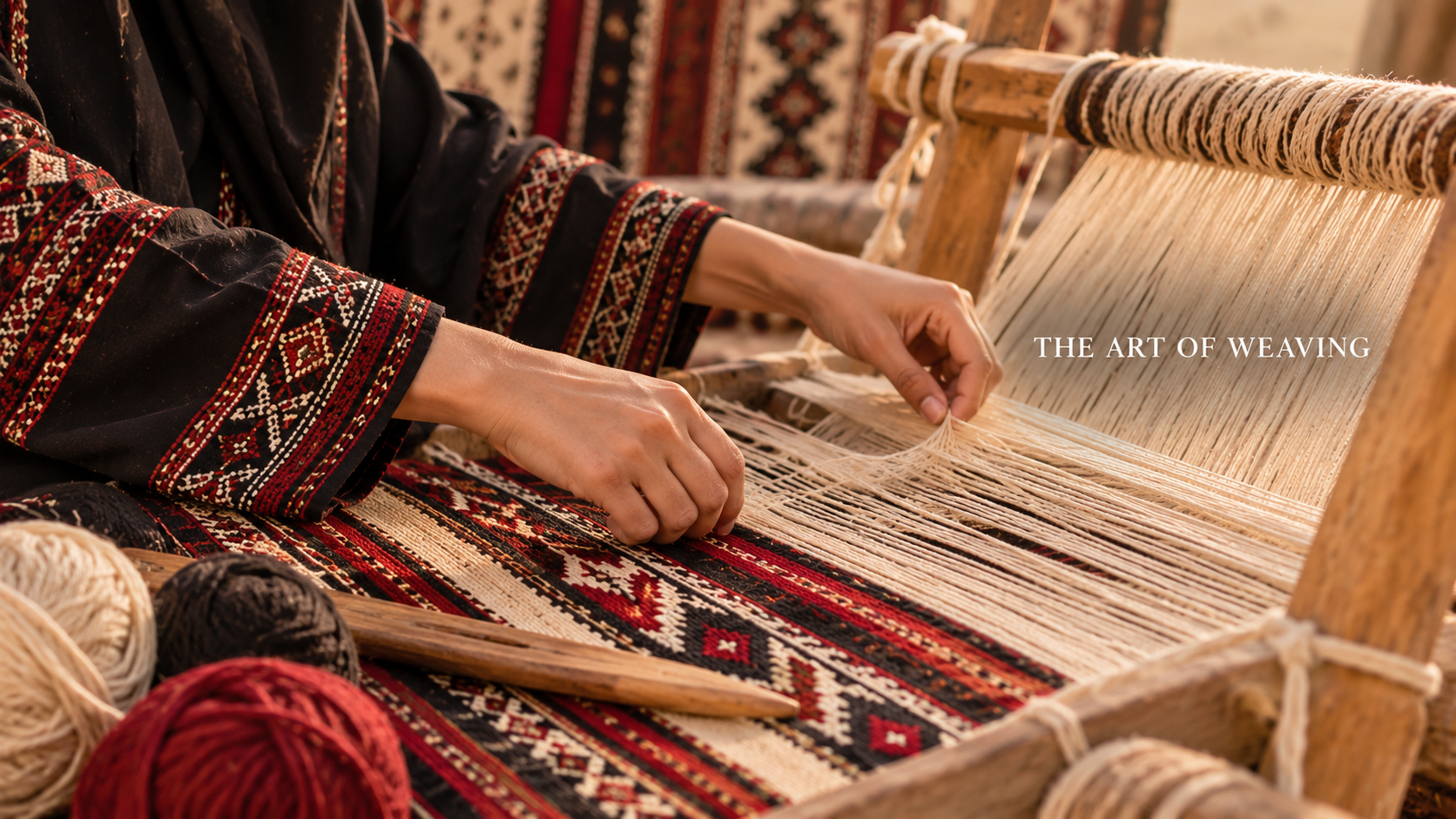
Traditional Emirati weaving is valued for the knowledge involved at each stage—from preparing fibres to creating the final pattern.
Al Sadu Patterns and Their Cultural Meaning
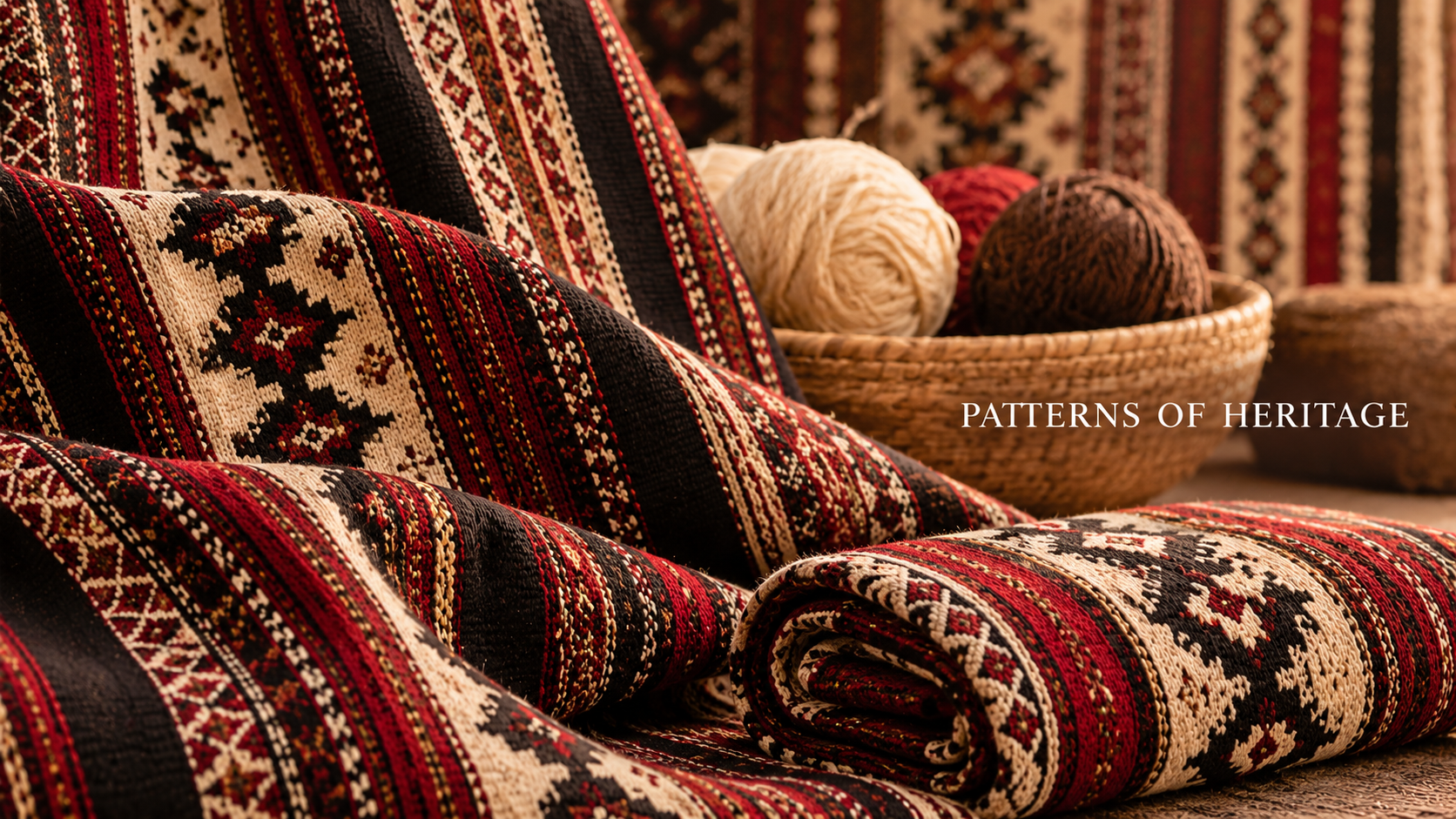
A distinctive feature of Al Sadu patterns is their geometric design. Narrow bands may include repeated shapes arranged in balanced and rhythmic patterns. Traditional colours include black, white, brown, beige, and red.
These designs are not simply decorative. They are part of the visual identity of the craft and reflect the skills and artistic choices of the weavers. Each textile also carries knowledge passed down through families and communities.
Why Is Sadu Weaving Important to Emirati Bedouin Communities?
Al Sadu has practical, social, and cultural value. It helped families create textiles for their homes and desert life. The weaving gatherings also supported community connections, as women shared skills and stories while working together.
Emirati Sadu weaving represents traditional knowledge, women’s contribution, and a strong connection with cultural identity. It is one example of how everyday crafts can become meaningful symbols of heritage.
Preserving Al Sadu Weaving Today
Changes in lifestyle, the decline of pastoral activities, and the growing use of industrial fabrics have made it harder to keep traditional weaving skills active. UNESCO notes that a safeguarding programme was carried out between 2011 and 2023.
It supported research, documentation, knowledge transfer, awareness, and opportunities for artisans. In 2025, UNESCO also selected the UAE’s safeguarding programme for its Register of Good Safeguarding Practices.
Workshops, exhibitions, and learning activities can help younger generations discover the craft and learn from experienced weavers. Preserving Al Sadu weaving means protecting not only a textile technique, but also the knowledge and community traditions behind it.
Conclusion
Al Sadu weaving is a valuable part of the UAE’s cultural heritage. From making useful textiles for desert life to creating distinctive geometric designs, the craft reflects the creativity and experience of Emirati Bedouin communities.
Today, continued training and cultural programmes help pass these skills on to new generations. By supporting traditional artisans and learning about their work, people can help keep this heritage alive for the future.