

Introduction
Thousands of people apply for jobs in the UAE every week. Many have good degrees and solid experience, yet they still struggle to get interview calls.
Often, the gap is not education. It is the mix of skills that employers actually look for when they read a CV.
The UAE attracts job seekers from almost every country, so competition is strong. The good news is that most in-demand skills can be learned or improved with steady practice.
This guide looks at recent hiring data and explains which professional skills matter most right now. It also shows how you can build them without spending a fortune.
What Employers Are Really Asking For
A recent study called the UAE Skills Index checked 4,706 LinkedIn job listings posted between August and September 2026. It searched each listing for 57 different skills.
The results surprised many people. The most requested skills were not technical at all.
Technical knowledge still matters, of course. But in many listings, it sits alongside basic human skills that employers expect from day one.
|
Rank and Skill |
Share of Job Listings |
|
1. Communication |
59.1% |
|
2. Teamwork |
41.7% |
|
3. Leadership |
32.7% |
|
4. English |
26.3% |
|
5. Budgeting |
24.4% |
|
6. Problem solving |
20.7% |
|
7. Arabic |
16.5% |
|
8. Attention to detail |
16.5% |
|
9. Stakeholder management |
15.8% |
|
10. Excel |
15.8% |
These figures tell you something important about the UAE job market. Employers want people who can work well with others, explain ideas clearly and handle real business tasks when they shortlist candidates for jobs in the UAE.
1. Communication Comes First
Communication appeared in almost six out of ten listings. For entry-level roles, the figure was even higher, at 67.6%. Good communication is not about fancy words. It means writing clear emails, speaking confidently in meetings and listening properly.
In a workplace with people from dozens of countries, this matters even more. A simple, polite message often works better than a long and complicated one.
You can practise by writing short summaries of your work, joining group discussions or presenting small updates to your team.
Communication also means knowing when to share information. Telling your manager early that a deadline may slip shows that you can be trusted with responsibility.
2. Teamwork and Leadership

Teamwork ranked second and leadership third. Together, these are the soft skills that decide how well you fit into a company. Leadership does not only mean managing people. It also means taking responsibility, solving problems before they grow and helping new colleagues settle in.
In interviews, talk about real examples. Explain a project where you worked with others, what went wrong and how you fixed it.
Hiring managers remember stories far more than a list of qualities.
Simple habits help too. Arrive on time for meetings, share credit with colleagues and offer help when someone is under pressure.
3. English and Arabic Language Skills
English appeared in 26.3% of listings and Arabic in 16.5%. For entry-level roles, English was even more common, at 35.3%. Most offices in the UAE use English as their main working language. Strong spoken and written English is often a basic requirement.
Arabic is a real bonus, especially in government-facing roles, customer service and sales. Even basic greetings and phrases can help you build trust with clients.
If you plan to learn Arabic, focus first on everyday phrases used at work, such as greetings, thanks and simple questions. Small efforts are noticed and often appreciated.
Short evening courses and free apps make it easier to start learning while you work.
4. Budgeting and Excel

Budgeting appeared in nearly a quarter of listings, and Excel in 15.8%. These skills are useful in almost every department, not only in finance. Managers want people who can track costs, read simple reports and plan spending.
Good Excel skills let you do this quickly and accurately. Start with the basics, such as formulas, filters and simple charts. Then move on to pivot tables and lookup functions.
Free online tutorials can sharpen your Excel skills in a few weeks if you practise a little every day.
If you can prepare a clean monthly report or a simple cost tracker, mention it clearly in your CV. Practical examples carry more weight than a list of software names.
5. Problem Solving and Attention to Detail
Problem-solving and attention to detail both made the top ten. Employers want people who notice errors and fix them before they reach a client.
In practice, this means checking your work twice, asking questions when something is unclear and suggesting better ways to handle routine tasks. You can show this on your CV with real results.
For example, mention a process you improved or a mistake you caught that saved time or money.
Many hiring managers also test this skill during the application itself. A CV with spelling mistakes or wrong dates can be rejected before anyone reads your experience.
6. Digital and AI Skills
AI is growing fast, but it is still a smaller part of daily hiring. PwC data shows the share of UAE job postings asking for AI skills rose from 1.0% in 2021 to 3.2% in 2025. That growth is real, so basic digital confidence is a smart investment. Learn how to use AI tools for research, first drafts and organising data.
UAE experts also describe the best mix as AI literacy, analytical thinking and strong human skills working together. You do not need to become a programmer. Knowing how to use these tools well already puts you ahead of many applicants.
Always check AI output before you use it. Employers value people who use these tools carefully and can spot when an answer is wrong.
7. Technical Skills by Industry
Some sectors still need specific technical knowledge. A Naukrigulf report named HVAC, accounting and customer support as critical skills in the UAE.
• Construction and facilities: HVAC, safety and site management
• Finance: accounting, reporting and compliance
• Hospitality and retail: customer service and sales
• Technology: cloud, data and cybersecurity
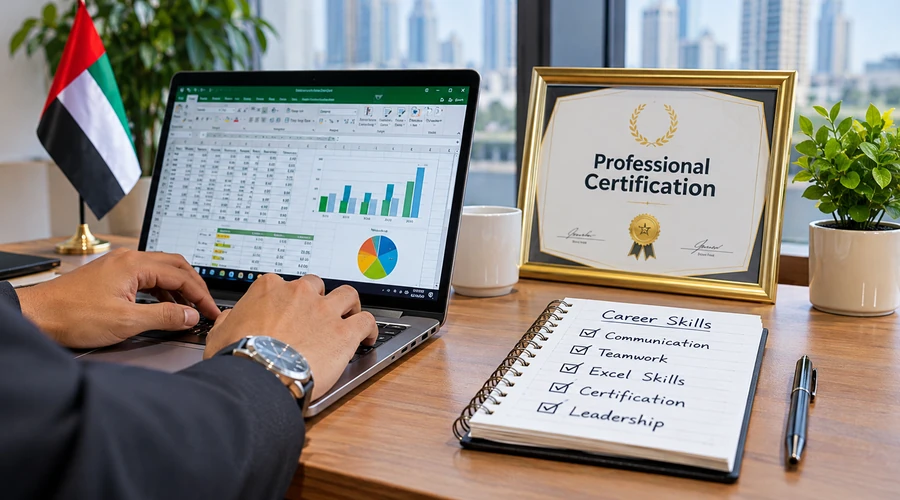
A recognised professional certification in your field can help your CV stand out. Examples include accounting, project management, HVAC or cloud certificates. Before you pay for any course, check that employers in your sector actually accept it.
Short courses from recognised training centres are often more useful than long, general programmes. Look for options that include practical projects you can show to employers.
How to Show Your Skills on Your CV
Having skills is one thing. Proving them is another.
• Use the same skill words that appear in the job advert
• Add numbers to your achievements where possible
• Keep your CV to one or two pages
• Update your LinkedIn profile so it matches your CV
• List each professional certification with the year you completed it
Many companies use software to scan CVs first. Matching words from the advert helps your application reach a real person. If you are searching for jobs in Dubai, tailor each CV to the company and role instead of sending the same file everywhere.
Prepare for interviews, too. Practise answering common questions out loud and keep two or three short stories ready that show your best skills in action.
Keep Learning After You Get Hired

Skills keep changing, so the ability to learn and adjust quickly matters as much as any single technical skill.
Set aside a few hours each month for learning. This could be an online course, a workshop, or simply reading about your industry. People who keep improving find it easier to ask for promotions and move into better jobs in the UAE later.
Ask for feedback from managers and colleagues as well. It shows which skills you should work on next and proves that you are serious about growing.
Before accepting an offer, also think about living costs. Our guide on the real cost of living in Dubai can help you judge whether a salary is enough.
Quick Action Checklist:
Skill Area |
How to Build It |
|
Communication |
Practice clear emails and short presentations |
|
Teamwork |
Join group projects and volunteer for team tasks |
|
English or Arabic |
Take short courses or use language apps |
|
Excel |
Learn formulas, pivot tables and charts |
|
AI tools |
Use them for drafts, research and data work |
|
Certification |
Choose one recognised by employers in your field |
Conclusion
Getting better jobs in the UAE is not only about having the right degree. Employers want people who communicate clearly, work well in teams and handle everyday tasks with care. Start with the soft skills that appear most often in job adverts.
Then add practical tools like Excel, basic AI use and a certificate that fits your field. The UAE job market rewards people who keep learning. Whether you are targeting jobs in Dubai or another emirate, small steps each month can lead to stronger offers and steadier career growth.
Pick one skill to improve this month and track your progress. Over time, those small gains add up and make your CV much harder to ignore.