

Every real estate cycle has a moment when the story changes from "everything is going up" to "it depends." In 2026, real estate Dubai appears to be in that phase. Activity is still high and prices sit near record levels, but the easy, market-wide gains of recent years are fading. This guide covers what the data says as of September 2026, and what it means for buyers, investors, and renters.
The Big Picture: From Boom to Maturity
Dubai's market is moving into a more mature growth phase, according to Arabian Business, which reported that Dubai's property market generated AED286.43bn ($78bn) in sales during the first six months of 2026, across 79,229 transactions. The year opened strongly, with January the busiest and highest-value month of the first half. Arabian BusinessArabian Business
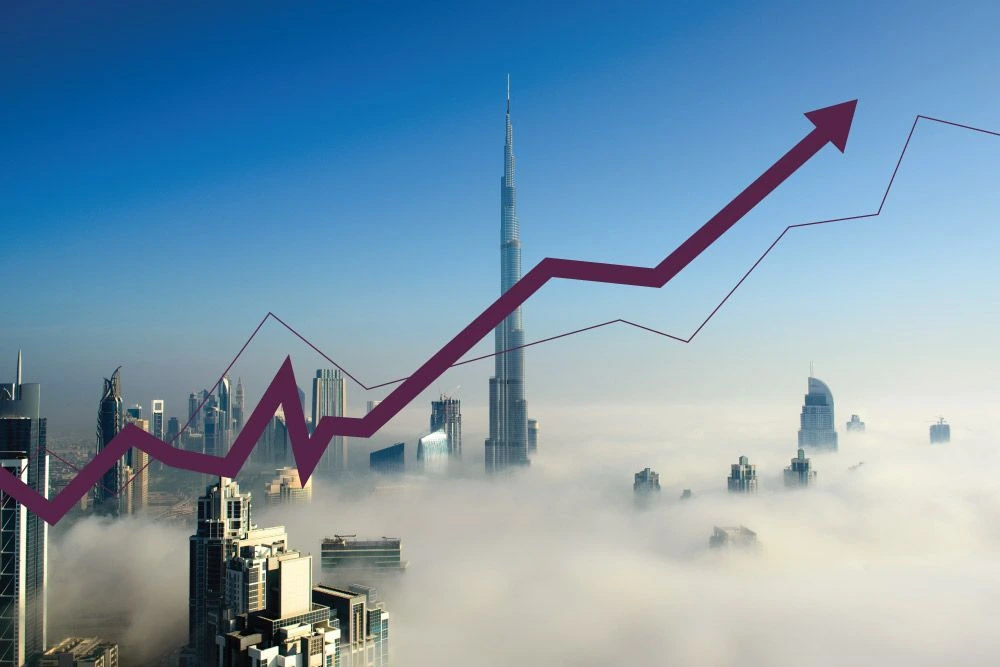
Momentum then cooled. Data from dataHabibi shows that January 2026 alone brought in AED 72.4B in sales, reportedly the strongest single month in Dubai real estate history, before activity moderated through the spring. Compared with the exceptional 2025, Engel & Völkers reports that residential transaction volumes fell 13.8% and value fell 15.7% in H1 2026, which it describes as more measured buyer activity rather than broad-based price weakness.
A note on the numbers: different sources define "sales" differently (all property versus residential only, and different date ranges), so figures vary slightly between reports. Focus on the direction, not the decimals.
Trend 1: Off-Plan Still Dominates
Off-plan property, bought directly from developers before completion, remains the engine of the market. In Q1, off-plan properties accounted for around 70% of total transactions and value. Later in the year, dataHabibi's analysis of Dubai Land Department records found that 66% of home sales between January and early July were off-plan. gulfnewsdataHabibi
Why buyers like it: flexible payment plans and lower entry prices. Buyers can also track construction progress, and escrow accounts protect funds. The caution is that delays may occur, so developer track record matters more than a glossy brochure.
Trend 2: A Two-Speed Market
The most important shift in 2026 is that Dubai no longer moves as one block. Property Monitor's index showed an average residential price of approximately AED 1,636 per sq ft in July 2026, with annual growth of about 4.98%, and prices remain close to their historic high. But per CA Properties' analysis, price momentum has weakened across several established communities, while other locations continue to record strong growth.
In practice, this means:
-
Villas and low-density communities continue to outperform apartments due to limited supply and lifestyle demand
-
Prime and branded residences keep attracting headline deals, including an Aman Residences Dubai property that sold for AED422m in March, the largest single transaction of the first half Arabian Business
-
Mid-market apartments in high-supply areas face more competition
Trend 3: The 2026 Supply Wave
Supply is the biggest question mark. Around 120,000 units are scheduled for handover in Dubai in 2026, and Fitch Ratings expects this to likely put pressure on prices and rents.
Two things soften that picture. First, historically only about half of scheduled units are delivered on time, so supply pressure will be uneven rather than market-wide. Second, Engel & Völkers notes that actual handovers remain well below headline launch numbers, easing near-term oversupply concerns.
Watch the areas with heavy apartment pipelines. JVC and Business Bay, according to dataHabibi, are where developers have launched the most recent off-plan phases, giving both above-average exposure to the 2026-2027 handover wave. Property Finder also points to a surplus in districts like Arjan and Dubai Land.
Trend 4: Rents Normalise
For tenants, this is the most welcome trend. Property Finder's forecast points to "market normalisation" through the end of 2026 rather than a sharp correction. New completions mean tenants move to newer buildings offering better amenities at similar or lower price points, while villas and established family communities like Arabian Ranches remain more resilient.
One analyst's realistic outlook is 0% to 4% rent growth for many apartment areas and 3% to 6% for the strongest villa and townhouse communities.
Trend 5: Yields Stay Attractive
Rental income is a central part of the investment case. Engel & Völkers reports that residential rental yields average 6.3% across Dubai as of August 2026. Earlier in the year, REIDIN's data estimated apartment yields as high as 7.08% in Dubai, with villas averaging 4.54%.
The lesson: the most expensive areas are rarely the highest-yielding. Prestige locations like Palm Jumeirah and Downtown are excellent lifestyle markets, but their modeled net yields are among the lowest, so avoid them if income is your only goal.
Trend 6: Cheaper Financing, Still a Cash-Heavy Market
Borrowing costs have eased. According to dataHabibi, one-month EIBOR fell from about 5.3% in January 2024 to roughly 3.7% by mid-2026, with five-year fixed mortgage rates starting near 4.19%. Mortgage activity is growing, with Cavendish Maxwell data showing about 10,800 residential mortgage transactions in Q1 2026, up 16.1% year on year.
Still, Dubai is not primarily a mortgage market. Cash covers roughly two-thirds or more of monthly purchases, which limits how much interest rates move the core of demand.
Trend 7: End-Users and Long-Term Holders
Investor behavior is changing. Analysts note that investors now focus on rental income and long-term holding rather than quick resale, and that demand is stronger for master-planned communities and developers with delivery history. Population growth, regulation such as escrow rules, and residency options like the Golden Visa tied to ownership all support this steadier buyer base.
Communities to Watch
Several communities repeatedly come up in 2026 analysis:
-
Dubai Hills Estate, Arabian Ranches, Ranches 3: family-friendly, with parks and schools, and steady demand
-
JVC and JVT: affordable entry points and healthy activity, but exposed to new supply
-
Business Bay and Downtown Dubai: central, close to work, dining, and transport
-
Dubai Marina: one of Dubai's largest apartment-driven investment markets, with significant transaction liquidity
-
Areas along the future Metro Blue Line: attracting renewed interest as commute times matter more in purchase decisions
Where Forecasts Disagree
No one agrees on the direction. In early 2026, ValuStrat forecast residential capital values rising 16% in 2026, while Fitch warned that a moderate correction is possible, driven by a widening supply-demand imbalance. A more balanced view is that 2026 is less about predicting whether prices move up or down across the entire market and more about understanding where long-term value exists.
The main risks to watch are supply actually landing, rental performance, and regional geopolitics. Gulf News reported that the market has held firm even against a backdrop of regional uncertainty, while S&P has flagged regional geopolitical conflict as the main risk to its outlook.
What This Means for You
If you're buying to live: Look for established communities with completed infrastructure, and use the supply wave to negotiate. Check service charges, the building's condition, and distance to schools and work.
If you're investing for rent: Look beyond headline yield. Compare service charges, vacancy risk, and how many similar units are about to complete nearby. Well-located units in established buildings should hold up better than new stock in oversupplied areas.
If you're buying off-plan: Vet the developer's delivery history, understand the payment plan and escrow arrangements, and plan for possible delays.
If you're renting: Tenants have more negotiating power in areas with heavy handovers, especially in apartment-heavy districts. Lease renewal terms are worth comparing.
The Bottom Line
The story of real estate in Dubai in 2026 is selectivity. Volumes are high, prices are near their peak, yields are healthy, and financing is cheaper, but a large supply pipeline and uneven performance across communities mean location, property type, and developer quality now matter more than the overall trend. Do your research, and treat forecasts, including the ones above, as scenarios rather than guarantees.