

Introduction
Many visitors arrive at Louvre Abu Dhabi expecting a smaller copy of the Paris museum. They leave surprised. It has its own story, its own building and its own way of showing art.
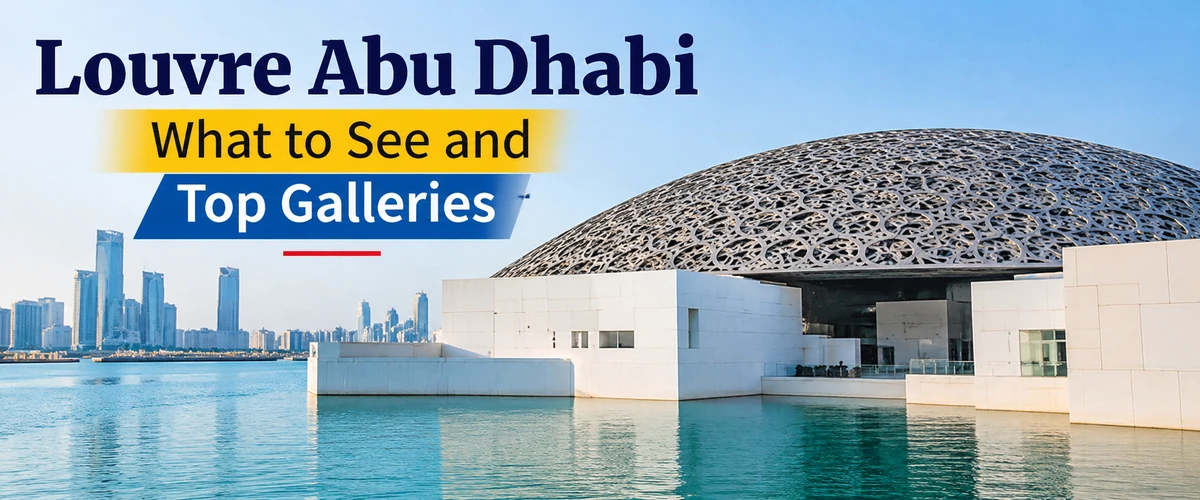
Opened in November 2017, the museum sits in the cultural district of Saadiyat Island. It has since become one of the region’s best-known cultural attractions.
Whether you love history, enjoy photography or simply want a calm place to spend a few hours, there is something here for you. No art expertise is needed.
This guide explains what you can see inside, which galleries deserve most of your time and how to plan a relaxed visit.
1. A Building That Is Part of the Art
The building was designed by French architect Jean Nouvel, winner of the Pritzker Prize. His design gives the museum a distinctive identity before visitors even enter the galleries.
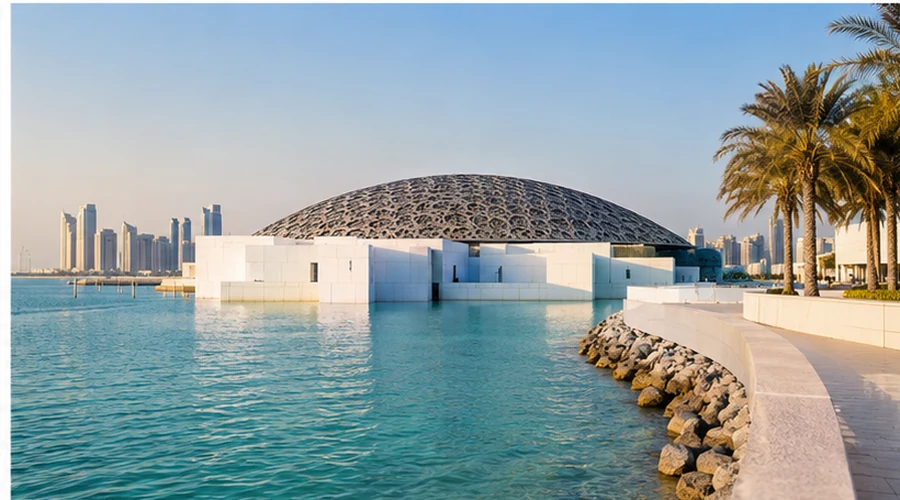
The huge dome is the signature feature of Jean Nouvel’s design. Its layered pattern lets sunlight fall through in small spots, often called a “rain of light”.
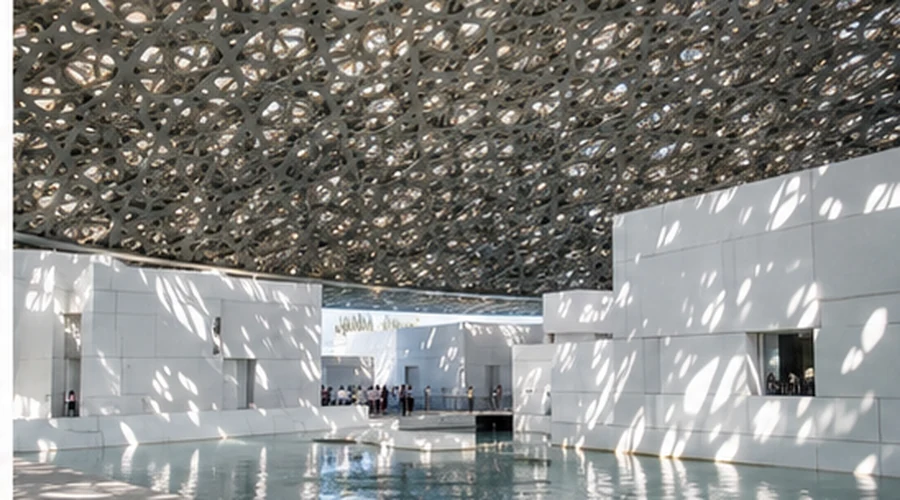
Under the dome, the museum feels like a small town of white buildings surrounded by water. Many visitors spend almost as much time here as in the galleries.
The museum sits beside the water. On calm days, reflections of the dome and white walls make some of the capital’s best photos. This waterfront setting is part of what makes the building so distinctive.
2. One Story Told in 12 Chapters
Most museums group art by country or period. This one does something different. The approach makes history feel connected rather than divided by borders. The galleries tell the story of humanity in twelve chapters, arranged in time order. Each room places objects from different cultures side by side to show what people shared.
So, instead of an “Egypt room” or a “China room”, you might see statues from three continents in one display. The idea is to show connections, not borders.
More than 600 artworks are displayed across the permanent galleries, including loans from leading French museums.
Labels are written in Arabic, English and French. Short introductions at each gallery entrance explain the theme before you walk in.
3. The 12 Galleries at a Glance
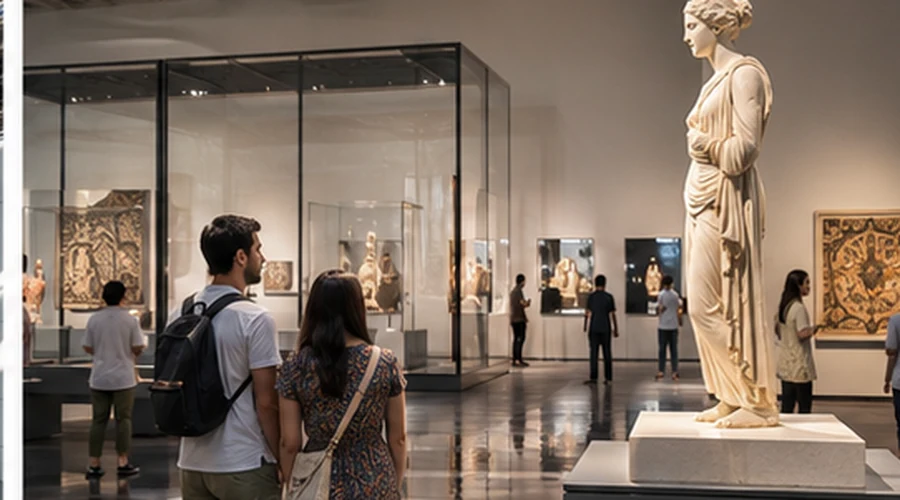
Here is a simple guide to the twelve chapters you will walk through, in order.
|
Gallery |
What It Covers |
|
1. The First Villages |
Early farming communities and the first crafted objects |
|
2. The First Great Powers |
Early kingdoms, rulers and writing |
|
3. Civilisations and Empires |
Large empires and the art they produced |
|
4. Universal Religions |
How major faiths shaped art and ideas |
|
5. Asian Trade Routes |
Goods and ideas moving across Asia |
|
6. From the Mediterranean to the Atlantic |
Europe and North Africa in the late Middle Ages |
|
7. The World in Perspective |
Maps, travel and new views of the world |
|
8. The Magnificence of the Court |
Royal art and luxury objects |
|
9. A New Art of Living |
Daily life, design and changing tastes |
|
10. A Modern World? |
Industry, cities and new ways of seeing |
|
11. Challenging Modernity |
Bold art of the early 20th century |
|
12. A Global Stage |
Contemporary art from around the world |
Each chapter builds on ideas introduced in the rooms before it. Displays change, so some works may be moved or replaced during your visit.
You do not need to read every label. Choose a few objects that catch your eye and spend a little more time with them.
4. Galleries That Matter Most for First-Time Visitors
If you have only a couple of hours, focus on the rooms that best express the museum’s idea.
• The First Villages, for some of the oldest objects in the collection
• The First Great Powers, for ancient royal and funerary art
• Universal Religions, where sacred texts and objects from different faiths sit close together
• The World in Perspective, for maps, globes and early science
• A Global Stage, for modern and contemporary works
Walking through them in order helps you notice how ideas, materials and styles travelled between cultures.
Start with these rooms, then explore further if time allows. These five galleries give you a sense of the whole journey, from the earliest communities to the present day.
If you have more time, Asian Trade Routes and The Magnificence of the Court are also rewarding, with objects linked to long-distance trade and royal life.
5. Ancient Treasures Worth Finding
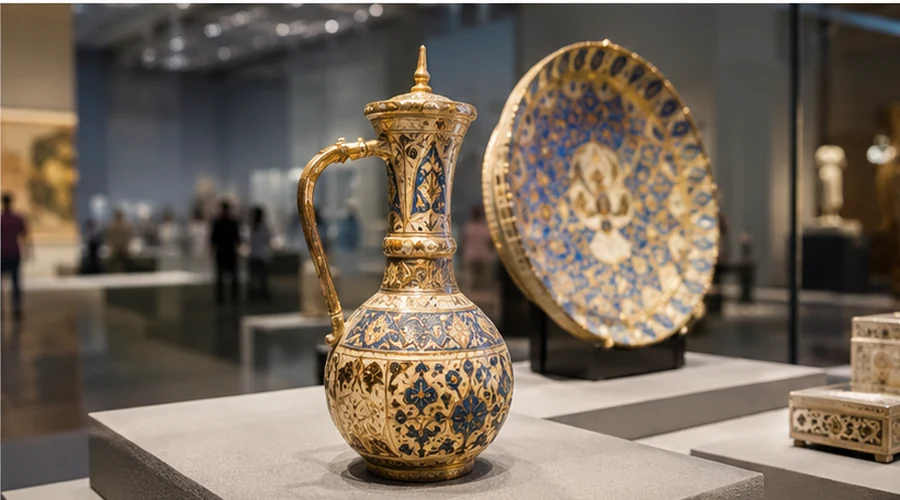
The oldest objects connect broad historical themes with everyday lives. Look for the small statuette of a Bactrian princess in The First Villages.
In The First Great Powers, look for the painted sarcophagus of Princess Henuttawy. Its colours and fine details remain clear after thousands of years.
These rooms are often quieter in the morning, making it easier to read the labels and enjoy each piece. Take your time here rather than rushing ahead to the famous paintings in the later galleries.
Many objects are small, so look closely at the cases. Carvings, jewellery and tools reveal how people lived, worked and what they believed.
6. Famous Paintings and Modern Works
Later chapters bring in painting and modern art. Visitors often look for Napoleon Crossing the Alps by Jacques-Louis David, which has been displayed in the galleries.
The final rooms explore the 20th and 21st centuries through works that play with light, space and new materials. Notice the materials, colours and scale, as small details reward a slower look.
Many pieces are on loan. Check the museum’s app or website before visiting if you want to see a particular work. The later galleries make it easy to compare styles and see how art changed across countries and periods.
7. Exhibitions and the Children’s Museum
Alongside the permanent galleries, the museum has spaces for temporary exhibitions and a Children’s Museum. Temporary shows change during the year and often focus on one theme, artist or culture.
These changing displays give visitors a good reason to return. Some exhibitions may need a separate or combined ticket, so check what your ticket includes when you book.
The Children’s Museum uses hands-on activities to make art easier for younger visitors. It is a good choice for families looking for things to do in Abu Dhabi.
The museum also runs talks, workshops and family activities. Check the events calendar, as some sessions need booking.
8. Tickets, Timings and Getting There
Adult tickets for Louvre Abu Dhabi cost AED 70, including VAT. Visitors under 18 enter free, as do some other eligible groups, including UAE senior nationals and residents over 60.
Opening hours vary by day and season, and galleries may close briefly while new works are installed. Check the official website before visiting. Booking online is sensible, especially at weekends and in the cooler months.
Public bus route 94 also stops at the museum. Parking is available, and Abu Dhabi taxis can be found from most parts of the city. If you are coming from Dubai, allow extra time for traffic on the way back.
9. Tips for a Better Visit
A little planning can make the visit much more enjoyable.
• Allow around three hours for the galleries, the dome and a coffee break
• Bring a light jacket or shawl, as the galleries are kept cool
• Visit on a weekday morning for smaller crowds
• Download the museum app for maps and audio guides
• Wear comfortable shoes, as there is plenty of walking
The galleries are kept at around 20°C, so a light layer can help even in summer. In the hotter months, arrive early and enjoy the shade beneath the dome before the midday heat.
Photography without flash is generally allowed in the permanent galleries, but temporary exhibitions may have different rules.
If you need a break, the museum café is a good place to rest before you continue exploring.
More to Explore Nearby
The museum is part of the growing cultural district on Saadiyat Island. A Museums Pass lets visitors combine entry to the Louvre, the Zayed National Museum and the Natural History Museum.
This makes the area a useful base for exploring museums in Abu Dhabi in one trip. You can also walk along the waterfront or stop at a nearby café.
With a full day, you can visit two museums and have lunch in between. Pace yourself, as both sites involve plenty of walking. Leave breaks between visits, especially when travelling with children or older relatives.
For more on local traditions, read our guide to how Abu Dhabi celebrates Emirati culture through art and music.
Quick Action Checklist:
Step |
What to Do |
|
Book your ticket |
Buy online in advance, especially at weekends |
|
Check timings |
Confirm opening hours on the official website |
|
Plan your route |
Start with the five key galleries |
|
Check exhibitions |
See which temporary show is running |
|
Dress for comfort |
Wear good shoes and carry a light layer |
|
Explore nearby |
Consider a Museum Pass for more sites |
Conclusion
Louvre Abu Dhabi is more than a place to see historic objects. It connects human creativity in one story, from the first villages to the present day.
If time is short, focus on the five key galleries, spend a few quiet minutes under the dome and check the temporary exhibition schedule. Among the museums in Abu Dhabi, few offer this mix of art, history and architecture.
Plan, book your ticket and allow enough time to enjoy it properly. Take it slowly, follow the twelve chapters and let each room build on the last. That is the best way to understand the museum’s approach.
Whether you are a resident or a visitor, Louvre Abu Dhabi deserves a place on your list of things to do in Abu Dhabi.