

Ask ten people about Dubai's dress code and you'll hear ten different stories. One friend swears you need to cover up from head to toe. Another says it's as relaxed as Miami and you can wear whatever you like. Here's the thing: both are wrong, and the truth sits somewhere in the middle.
Dubai is a modern, global city that welcomes millions of tourists every year. It is also a Muslim country with its own values, and the way you dress matters most in public places like malls, markets and mosques. The good news is that the Dubai dress code for tourists is far simpler than the rumours make it sound.
In this guide, I'll walk you through what to wear, what to leave at home, and how to stay comfortable in the heat, so your outfit is the last thing on your mind.
Why Tourists Need to Understand Dubai's Dress Code
Most tourists do not worry about clothes until they are halfway through packing. Then the doubts start. Can I wear shorts? Is a sleeveless top fine? What about a swimsuit outside the pool?
Here is how I look at it. Dubai is home to people from more than 200 nationalities, and the city's tourism board says that all attires are generally acceptable. That is the welcoming side. The other side is that Emiratis dress conservatively and, as Singapore's foreign ministry puts it, expect visitors to respect this culture by dressing modestly in public. The UK government's travel advice goes a step further and reminds travellers that something that is not an issue back home can carry serious penalties in the UAE.
So the dress code is not about restrictions for the sake of it. It is about respect, and respect makes your trip smoother.
Quick Tips on What to Wear in Dubai
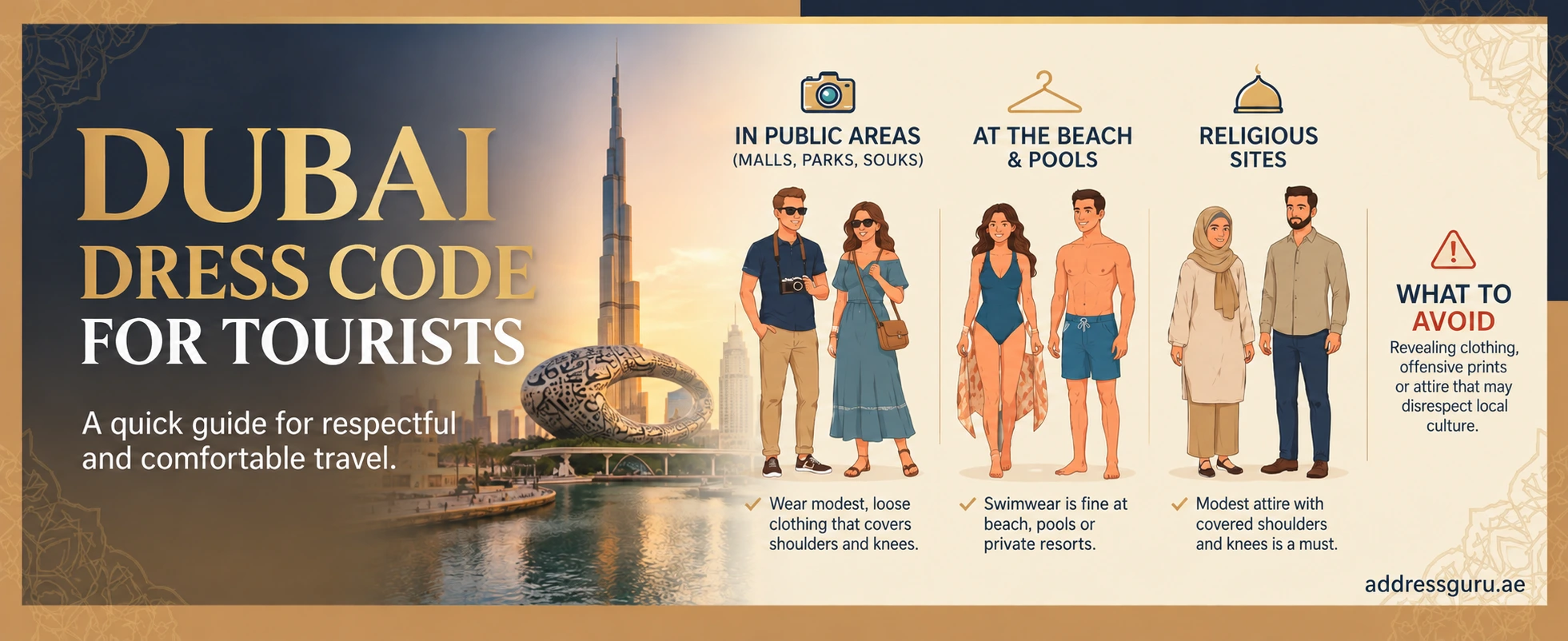
- Choose loose, lightweight clothes that cover your shoulders and knees in public places.
- Keep swimwear for beaches, pools, spas and water parks only.
- Carry a light scarf or shirt. It helps in air-conditioned malls and at religious or heritage sites.
- Pick breathable fabrics like cotton and linen.
- Check the dress code of a specific venue before you go.
Here is the one-glance version before we go deeper:
|
Place |
Wear |
Skip |
|---|---|---|
|
Malls |
A top with sleeves, knee-length shorts, trousers, skirt or midi dress |
Swimwear, very short or see-through clothes |
|
Shoulders and knees covered, light scarf |
Sleeveless tops, very short shorts |
|
|
Beach, pool, water park |
Swimwear, plus a cover-up for the walk out |
Swimwear anywhere beyond the water area |
|
Neat casual or smart casual, after checking the venue |
Beachwear |
|
|
Mosques |
Shoulders, arms and legs covered; headscarf for women |
Shorts, sleeveless or tight clothes |
|
Loose cotton or linen, closed shoes, scarf |
Heavy fabrics, flimsy sandals |
What to Wear in Dubai: Everyday Basics
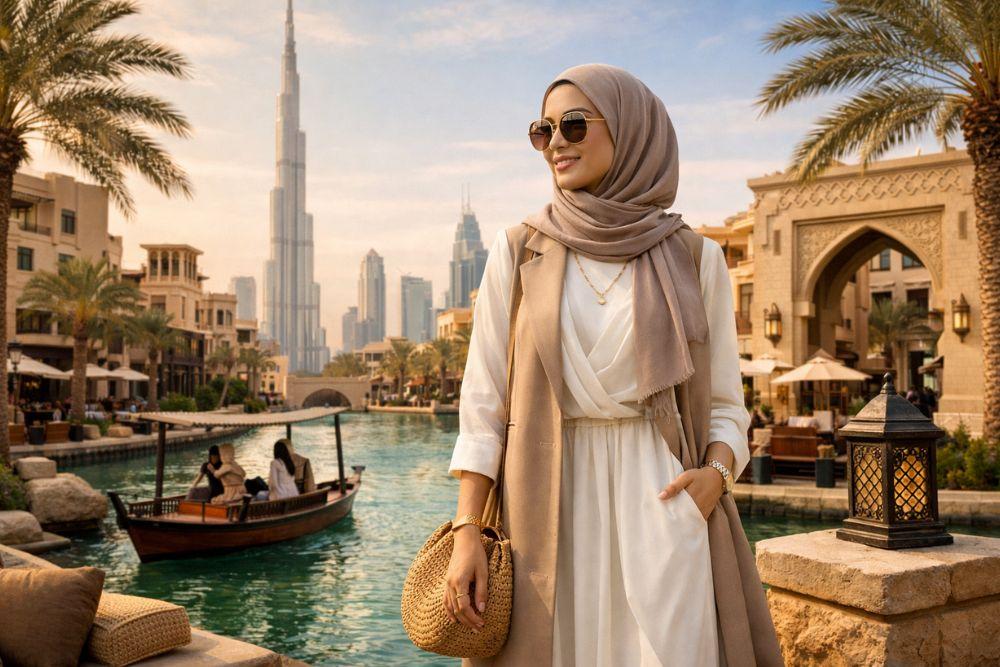
If I had to give one rule, it would be this: dress as you would for a respectful day out in a big, hot city. You do not need to cover everything. You just need to avoid clothes that are very tight, see-through or revealing in public areas.
Best Fabrics and Colours for Dubai's Climate
Dubai is hot for a large part of the year, so comfort matters as much as modesty. Cotton, linen and other breathable fabrics keep you cool. Light colours reflect heat better than dark ones, and loose cuts let air move. Indoor spaces are heavily air-conditioned, as the tourism board itself points out, so a thin layer in your bag is a smart idea.
Footwear and Accessories for Sightseeing
You will walk more than you expect, whether it is a large mall, a heritage lane or a waterfront promenade. Comfortable sandals or walking shoes are better than heels. Add sunglasses, a hat and a scarf, which does double duty as sun protection and a quick cover-up.
Dos and Don'ts of Dressing in Dubai
|
Do |
Don't |
|---|---|
|
Cover shoulders and knees in malls, markets and public areas |
Walk through malls or streets in swimwear |
|
Carry a cover-up for the walk to and from the beach or pool |
Wear see-through, very short or very tight clothes in public |
|
Follow any dress code displayed at a venue's entrance |
Wear clothes with offensive slogans or images |
|
Dress more carefully at religious and cultural sites |
Assume the rules are the same in every emirate |
What to Wear in Dubai Malls (and What to Avoid)
Malls are where many first-time visitors slip up, because the setting feels like a holiday. The UK government's travel advice specifically asks visitors to dress modestly in public areas such as shopping malls, and many malls display their dress code at the entrance.
I would keep it simple. Wear a T-shirt with sleeves or a light top, with knee-length shorts, a skirt, a midi dress or trousers. Avoid crop tops, very short shorts and swimwear. The tourism board is clear that swimwear is not appropriate in business districts and shopping malls.
One more thing worth knowing: some malls cater mainly to local families, and their entrance signs ask for more conservative dress.

If you see one, I'd simply go with it.
Dress Checklist for Shopping at Dubai Souks
Traditional souks sit in the older, more historical parts of the city, and the tourism board advises dressing conservatively in such areas. They are also crowded, warm and full of walking, so here is my checklist:
- Comfortable closed or flat footwear for crowded lanes
- A scarf or shawl for sun and modesty
- A small bag you can keep in front of you
What Is the Beach Dress Code in Dubai?
This is the part where Dubai is more relaxed than people expect. You do not need to cover up at the beach.
Swimwear Rules at Public and Private Beaches
According to the tourism board, swimwear is fine at beaches and pools, including hotel and resort pools and spa areas. I would still choose a regular swimsuit or trunks over anything extremely skimpy, especially at a public beach where families are around. Look out for signs, because some beaches have specific rules.
What to Wear When Leaving the Beach
The moment you leave the beach or pool area, swimwear is no longer appropriate. Keep a kaftan, shirt, shorts or a wrap handy and change before you head to a cafe, shop or the street.
What to Wear to Restaurants, Pubs and Nightlife in Dubai
The dress code here depends on the venue. Many restaurants and hotels state their requirements on their own websites or social pages, and a directory like AddressGuru UAE can help you find the venue and its details in one place. A two-minute check saves you from being turned away.
Casual and Family Dining
For everyday cafes and family restaurants, neat casual clothes work well. A shirt or top with sleeves, with shorts or trousers, is fine. If the restaurant is inside a mall, follow the mall's standards too.
Evening Venues and Lounges
Evening venues often lean towards smart casual or smarter. Think a dress or well-fitted outfit for women and a collared shirt with trousers for men. One more point I always stress: alcohol is allowed only in licensed venues, and the UK government warns that being drunk or drinking in a public place is illegal. Your outfit is only half of the etiquette.
Dress Checklist for Dubai Water Parks and Theme Parks
Water parks are one of the places where swimwear is completely expected. A quick checklist:
- Proper swimwear that stays in place on slides and rides
- A cover-up, towel or shirt for walking in and out of the park
- Water shoes or sandals for hot ground
- Sunscreen, a hat and sunglasses
- A dry change of clothes for the ride back
Every park has its own rules about swimwear, so check the guidelines before you pack. For theme parks that are dry, regular casual clothing is the right call.
How to Dress for a Dubai Desert Safari
The desert is practical rather than formal. Loose, breathable clothing in cotton or linen works best, along with closed shoes, since sand gets everywhere. Carry a scarf for dust and sun, and sunglasses. In winter, the desert gets noticeably cooler after sunset, so a light jacket is useful. I would also keep outfits modest, because you will usually be travelling in a group with other families.
Dress Code for Mosques, Government Buildings and Cultural Sites
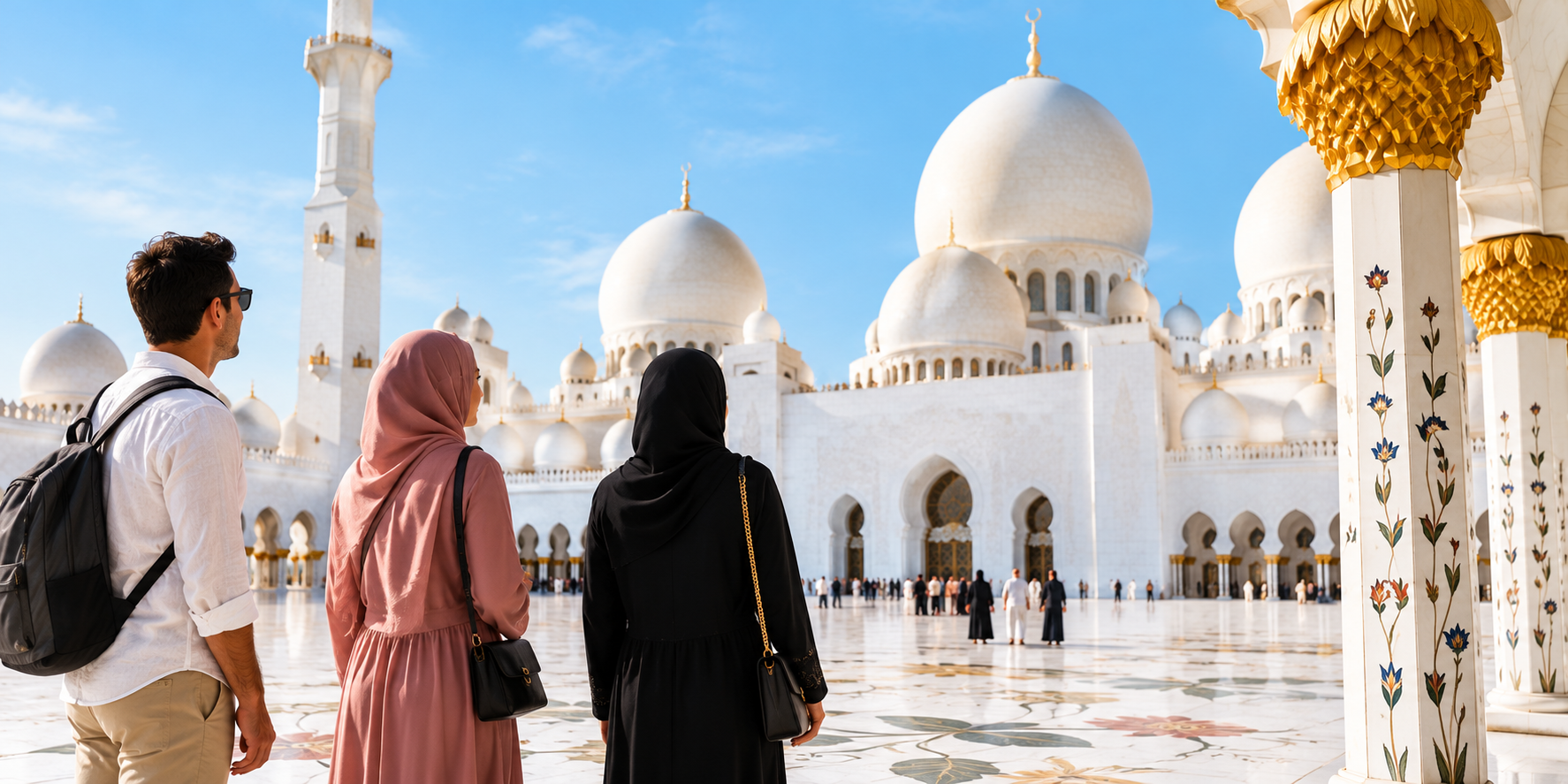
This is the one place where the dress code is a firm requirement. The tourism board states that clothing covering shoulders, arms and legs is required in mosques, and women need a headscarf. It applies to men as well, so shorts and sleeveless shirts are not suitable. Many mosques lend cover-ups to visitors, but I would carry my own to be safe.
For government buildings and cultural sites, think of it the same way: modest, neat and covered.
What to Wear in Dubai in Summer
Summer in Dubai is intense, and the heat shapes every outfit choice. The good news is that modest clothing and heat-friendly clothing are the same thing here: loose, light and breathable.
Summer Outfit Tips for Women
- Flowy cotton or linen midi or maxi dresses
- Wide-leg trousers with a loose short-sleeved top
- A light scarf, which covers shoulders in malls and shades you outdoors
Summer Dress Checklist for Men
- Knee-length shorts or lightweight trousers with breathable short-sleeved shirts
- Long light trousers and a collared shirt for dinners
- A cap, sunglasses and a thin layer for heavily air-conditioned indoor spaces
Things to Avoid Wearing in Summer
- Heavy or layered fabrics that trap heat
- Very tight or see-through clothing
- Beachwear away from the beach
Winter Dress Code Checklist for Dubai
Winter is the most pleasant season, with mild days and cooler evenings. The dress code does not change, but your layers do. Cool, rainy spells do happen, so one long-sleeved layer is cheap insurance. Mornings and afternoons suit light clothing, while evenings, waterfronts and the desert call for an extra layer.
Winter Dress Guide for Women
- Long-sleeved tops or a light cardigan
- Full-length trousers, midi skirts or long dresses
- A shawl or jacket for evenings and the desert
Winter Dress Checklist for Men
- Long-sleeved shirts or light sweaters with chinos
- A thin jacket for desert nights
- Closed shoes for evening outings
What Happens If You Ignore the Dress Code in Dubai?
Most of the time, a dress code slip ends with a polite request to cover up. I'd still rather you know where trips actually go wrong. The UK government warns that things which are fine at home can carry serious penalties in the UAE. Official guidance talks about public decency rather than a fixed tourist dress law, so trouble usually starts when someone nearby is offended.
Here are the situations I would watch:
|
Situation |
Where it goes wrong |
What I'd do instead |
|---|---|---|
|
Beach to cafe or mall |
Swimwear is fine at the beach, but not in malls or business districts |
Keep a cover-up and change before leaving the water area |
|
Malls for local families |
Entrance signs ask for more conservative dress |
Follow the sign: knees and shoulders covered |
|
Mosque visit |
Entry can be refused over clothing |
Carry a scarf and wear long sleeves and trousers |
|
Ramadan |
Clothing that falls short causes more offence, per UK government advice |
Choose longer sleeves, longer hemlines and looser fits |
|
Day trips to other emirates |
Rules are not the same everywhere |
Check local guidance before you go |
One habit I'd drop is taking your cue from the crowd. You will see people in all kinds of outfits, but you will not see the complaints. Modesty and privacy are both valued in Emirati culture, so photograph the skyline, not strangers.
My simple rule: carry one light layer and dress for the strictest place on your day's route. Do that, and you will rarely have a problem.
Conclusion
Dubai does not ask tourists to change who they are. It asks them to be thoughtful. Dress comfortably, cover your shoulders and knees in public places, save swimwear for the water, and take extra care at mosques and during Ramadan. If you are ever unsure about a venue, check its dress code or carry a light layer.
Get this right, and the clothes stop being a worry. You can spend your time enjoying the city, not wondering if your outfit fits in.