

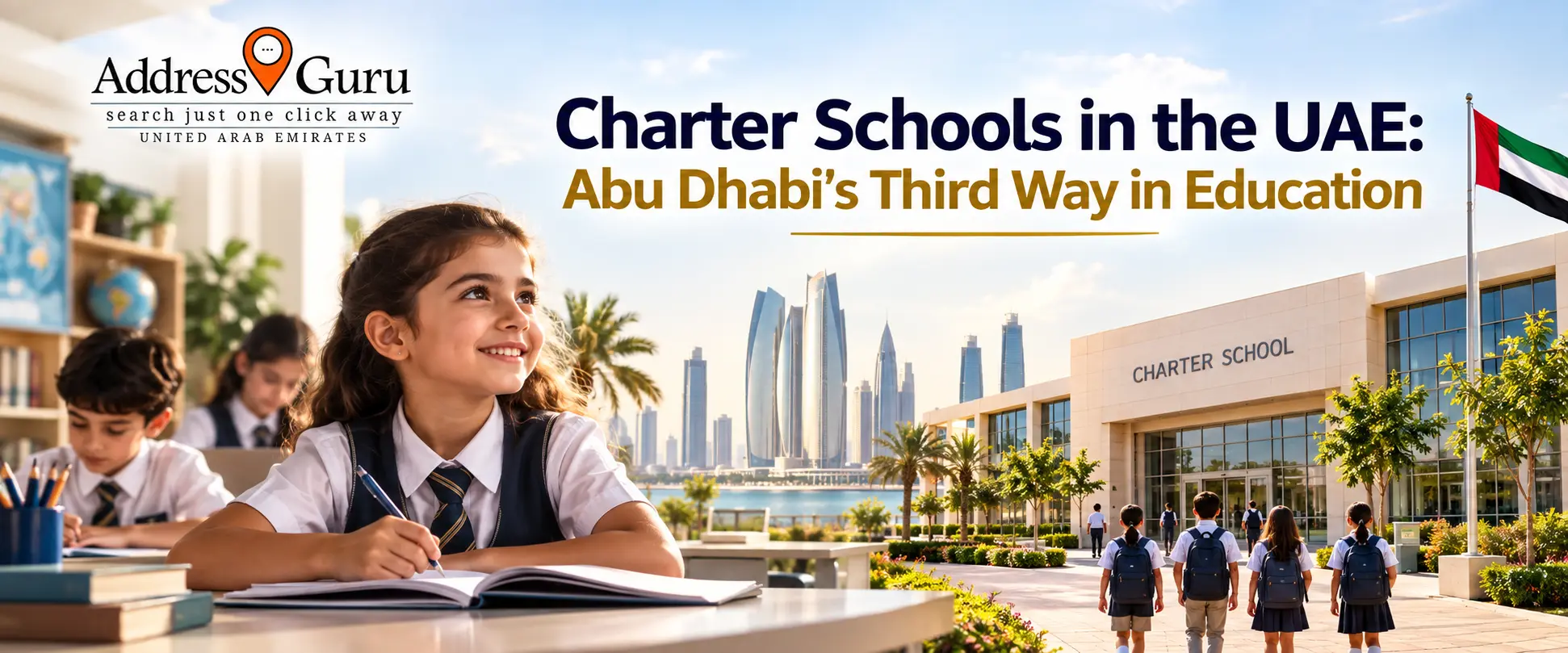
When most people hear the phrase charter school, they picture the United States. Yet one of the fastest-growing charter school programmes in the world is in the UAE.
In Abu Dhabi, the charter school model has moved from a bold experiment to a major part of the public education system. This guide explains how the UAE charter school system works, who it serves, how it has grown, and what questions remain.
What Is a Charter School in the UAE?
A charter school in Abu Dhabi is publicly funded but privately operated. The Abu Dhabi Department of Education and Knowledge (ADEK) describes charter schools as a third education model in the emirate, created through a partnership between the government and the private sector. Alongside traditional government schools and fee-paying private schools, the charter school gives families a different kind of public option.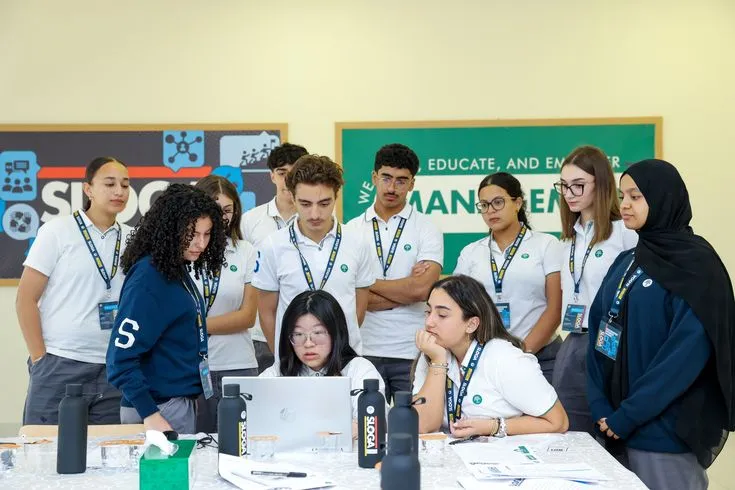
In practice, the government covers the cost while an experienced private operator runs the school day to day. This is why people often describe a charter school as a public school with private-sector management. The idea is to bring international teaching practices and operational discipline into the public system without asking families to pay tuition.
How the Charter School Programme Began
ADEK launched the publicly funded, privately operated charter school model in 2018 with the opening of the 2,700-seat Al Rayana School. The programme was then formalised as part of the government's wider reform agenda. In 2019, ADEK began implementing the Education Partnership Schools programme under the Ghadan 21 accelerator, aiming to provide 15,000 seats across 12 public schools.
That early phase mattered because it showed that a charter school could be created quickly by partnering with existing operators rather than building everything from scratch. It also set the template for later expansion.
Charter School Growth in Numbers
The growth of the network has been rapid:
-
By 2022, charter schools had created 34,500 places, and nine new openings that September were set to bring the total to 31 schools with 46,500 places.
-
In that period, 30,198 Emirati students were attending 15 charter schools in Abu Dhabi and seven in Al Ain.
-
The newer schools cover kindergarten and Cycles 1, 2 and 3, so the charter school offer now stretches well beyond the early years.
-
Officials reported that 93 per cent of students had progressed significantly academically since enrolling.
The expansion also had high-level backing. Sheikh Khaled bin Mohamed bin Zayed Al Nahyan endorsed the growth of the charter school programme after reviewing its results. These are official figures from 2022, so the network today is probably larger.
Infrastructure has grown alongside enrolment. In 2021, Abu Dhabi invited private-sector bids for three new charter schools in Zayed City, with a combined capacity of 5,360 students, as part of its wider public-private partnership pipeline. That shows the charter school model is treated as long-term infrastructure, not a one-off pilot.
Who Can Attend a Charter School?
Access is deliberately targeted. A charter school is available only in certain areas of Abu Dhabi, and only students living in those areas can enrol. Eligible students include UAE nationals, children of Emirati mothers, holders of citizenship decrees, and GCC citizens (for grade one and above).
The teaching model is also distinctive. The charter school education model is dedicated to public school students in Abu Dhabi and offers an American-based curriculum, beginning with kindergarten and cycle one, with more grades added as students progress. For families, that means a public-school place with a curriculum style often associated with private international schools.
Why Charter Schools Matter for Emiratisation
A charter school is not only a place for students to learn. It is also meant to be a career pathway for Emiratis. ADEK reported hiring 139 Emirati recruits into the sector as of 2022, using 12-month trainee periods after which selected candidates could move into permanent posts.
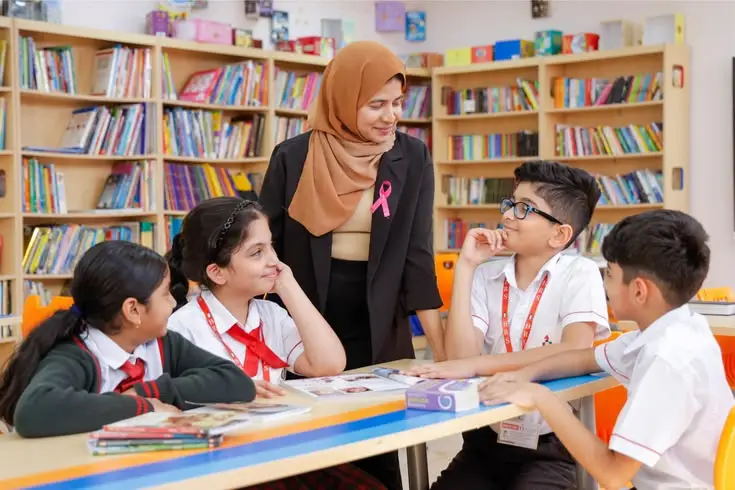
That focus has intensified. In May 2026, ADEK and Aldar signed a first-of-its-kind partnership aimed at a ninefold increase in UAE national representation across key roles in Aldar-operated schools. ADEK also points to its Kon Moallim initiative, which prepares UAE nationals through a postgraduate diploma in education. Emirati teacher development is now a central theme of the charter school sector, not a side project. It links classroom quality to national workforce goals, which helps explain why the government keeps investing in the charter school model.
Charter School Milestones: The First Graduates
A school system is only proven when its students finish it. ADEK has celebrated the first graduating class from its charter schools. Each new cohort leaving a charter school gives officials, families and researchers more evidence about long-term outcomes such as university readiness, Arabic proficiency and career pathways.
Charter School vs. Other Partnership Models
The UAE has more than one public-private education model, and it helps to keep them apart:
-
Abu Dhabi charter school: Aimed at Emirati and GCC students in designated catchment areas, with an American-based curriculum. ex- AL-Ghad school, Abdulla Bin Otaiba School, AL Salam Charter School etc
-
Dubai Schools: Launched in 2021-22 as a partnership between the Dubai government and private providers, these schools offer international curricula taught in English and accept Emiratis and other nationalities.
-
Ajyal Schools: Another government-and-private partnership model, where the UAE government bears tuition fees and all operating expenses.
The common thread is private expertise inside public education. The differences lie in who is eligible, which curriculum is used, and which authority oversees each school. The charter school is specific to Abu Dhabi's approach.
Challenges and Open Questions
Any charter school system invites scrutiny, and the UAE's is no exception. A few questions are worth watching:
-
Access: Because eligibility depends on nationality and catchment area, many families cannot consider a charter school at all. Whether eligibility widens over time will be an important signal.
-
Long-term outcomes: Early progress figures are encouraging, but the real test is how charter school graduates fare in higher education and careers.
-
Teacher supply: Growing the charter school network means recruiting and retaining many more qualified teachers, especially Emirati ones.
-
Operator accountability: Each charter school depends on a private partner delivering consistent quality year after year, which requires strong oversight and transparent reporting.
-
Curriculum and identity: Families will keep asking how an American-based curriculum in a charter school balances with Arabic language, Islamic studies and UAE culture.
Tips for Parents Considering a Charter School
If you are an eligible family, a few practical steps can help: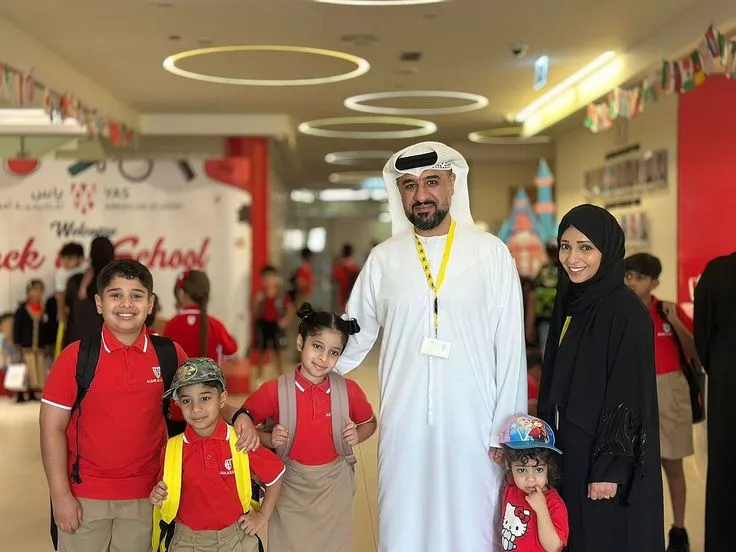
-
Check whether your home address falls within a charter school catchment area.
-
Confirm your eligibility category (UAE national, child of an Emirati mother, or GCC citizen).
-
Ask the school about its operator, curriculum, and the grades currently offered, since new charter schools add grades over time.
-
Look at recent inspection results and speak with current parents.
The Road Ahead
The UAE charter school story is still being written. In under a decade, Abu Dhabi has built a large network of charter schools that combines public funding with private-sector management, all tied to national goals like Emiratisation and a knowledge-based economy. With expansion continuing, new partnerships being signed, and the first graduates already out the door, the next few years will show how well the charter school model delivers on its promise. Families, teachers and policymakers will all be watching how each charter school performs.