

Building a resilient, profitable pest control business in the UAE is a demanding operational challenge. The country is a booming market, driven by fast real estate growth and world-class tourism, but it also brings distinct environmental pressures.
Extreme summer heat, high coastal humidity, and densely built cities create steady, year-round demand for professional pest management.
Because pest control touches public health, food safety, and building condition, the industry is closely regulated. Generic business blueprints rarely work here. This guide covers each of these in turn.
1. Navigating the Regulatory Landscape
Regulation in the UAE is decentralised across the individual emirates. A common and costly mistake for new investors is assuming that a licence issued in one emirate lets a company operate nationwide. In practice, a pest control company in Dubai must meet the requirements of the local municipal and environmental authorities wherever its vans actually work.
| Area | Typical Oversight Body | What to Confirm |
|---|---|---|
| Dubai | Dubai Municipality | Pest control licensing, approved products, technician requirements |
| Abu Dhabi | Abu Dhabi Agriculture and Food Safety Authority | Local licensing, approved chemicals, inspection rules |
| Sharjah and Northern Emirates | Local municipalities | Separate approvals for each emirate you serve |
Requirements and authorities can change, so confirm the current rules directly with each body before applying. Getting a pest control licence in Dubai right at the start is far cheaper than fixing a compliance problem after you have signed clients.
2. Building a Professional, Client-Ready Workforce
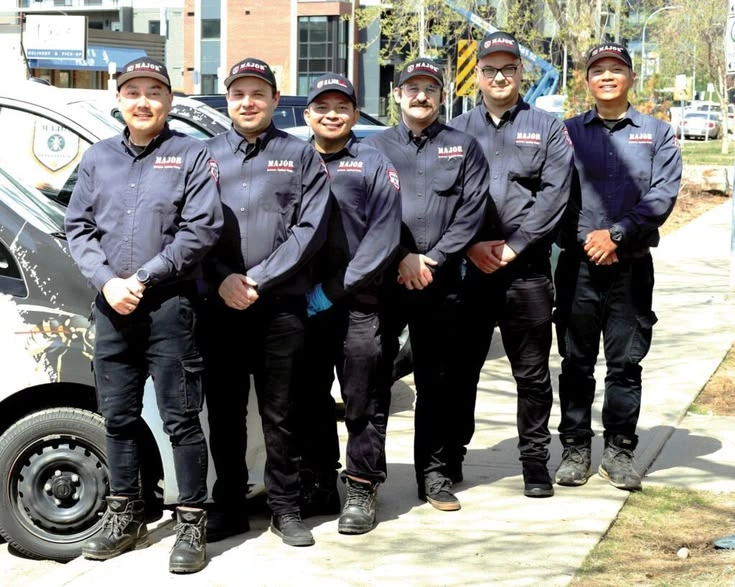
Technicians are the face of the company. In homes and hotels, how they behave often matters as much as the treatment itself. Train your team in client-facing etiquette:
- Wear clean shoe covers inside high-end residential homes.
- Respect privacy expectations and family hours.
- Explain structural problems clearly in English or basic Arabic, without alarming the client.
- Arrive on time, in uniform, with identification visible.
A well-trained, courteous technician turns a one-time call into a long-term client and a referral.
3. Climate Resilience and the Midday Break Rule
The Gulf climate demands uncompromising safety standards. In summer, when temperatures often exceed 45°C, the Ministry of Human Resources and Emiratisation (MOHRE) enforces a Midday Break Rule that bans outdoor work during the hottest part of the afternoon. It normally applies through the peak summer months, so check the current dates each year.
Managers should shift heavy outdoor work to cooler hours.
| Task | Better Time Window |
|---|---|
| Pre-construction anti-termite soil barriers | Early morning |
| Large-scale community thermal fogging | Early morning or late evening |
| Indoor inspections and treatments | Flexible, including midday |
| Administrative work and planning | Midday, while crews are on break |
Reliable air conditioning in field vans and regular hydration breaks are basic requirements. They prevent heat exhaustion and also help you keep experienced workers.
4. High-Conversion Client Acquisition Strategies
A strong pest control business in the UAE needs two separate sales pipelines. A residential tenant and a corporate procurement officer buy for completely different reasons.
| Operational Factor | Residential Market (B2C) | Commercial Market (B2B) |
|---|---|---|
| Sales cycle | Immediate, from minutes to hours | Extended, from weeks to months |
| Pricing structure | Flat fees and standard annual packages | Retainer contracts based on clear SLAs |
| Main conversion driver | Speed of response, transparent pricing, reviews | Facilities managers and executive chefs |
| Best marketing channels | Google search, Google Business Profile, WhatsApp, reviews | Direct outreach, tenders, referrals, case studies |
For government and semi-government work, a high In-Country Value (ICV) score can be a major advantage. Localised investment and domestic spending improve your score and your chances when bidding.
5. Digital Operations and Financial Sustainability
To protect your margins against intense competition, run the business on digital tools and careful pricing.
Field Service Automation and QR Auditing
Paper logs and manual scheduling are a serious weakness. A modern company should use an Enterprise Resource Planning (ERP) system connected to mobile apps for field crews.
 Every bait station, pheromone trap, and insect light trap at a commercial client's site should carry a weather-resistant QR code. Technicians scan each one during inspection rounds, which records a timestamped GPS location. That gives both the client and municipal inspectors clear proof that the service was done thoroughly.
Cross-Emirate Expansion Framework
A common mistake is opening branch offices in several emirates at once. This weakens management oversight and pushes overhead up before local revenue has had time to grow. Expand in phases instead.
| Phase | Focus | Why It Works |
|---|---|---|
| 1. Strengthen the home base | Stable operations and profitable contracts in Dubai | Funds the next stage without strain |
| 2. Secure approvals | Obtain independent regulatory approvals in the new emirate | Avoids operating without proper permission |
| 3. Open a small local office | Start with a lean team and a few anchor clients | Limits financial risk |
| 4. Scale | Add crews and services once revenue is steady | Growth is supported by real demand |
Your central hub can absorb early administrative and purchasing costs. New satellite operations then benefit from your existing brand, tested training programmes, and supplier relationships, which lowers the capital risk of entering a new market.
6. Institutional Brand Differentiation
The lower end of the market is crowded with small operators competing only on price. To rise above that, promote your technical strengths.
| Specialisation | Best Suited To | Why Clients Pay More |
|---|---|---|
| Heat treatment for bed bugs | Hotels, serviced apartments | Fast, chemical-light results |
| Canine inspection units | Hotels, premium homes | Precise detection with little disruption |
| Eco-friendly biological control | Eco-resorts, clinics, health facilities | Low-toxicity, safer for sensitive environments |
| Documented compliance reporting | Restaurants, food producers | Helps pass audits and inspections |
Combine that technical skill with full compliance and strong software, and a standard service firm becomes a leading environmental health business.
Common Mistakes When Starting a Pest Control Business
- Assuming one licence covers every emirate. Each area has its own approvals.
- Ignoring the summer work-hour rules. Penalties and worker safety risks are real.
- Using the same sales pitch for homes and companies. B2C and B2B buyers decide very differently.
- Competing only on price. It attracts the least loyal customers.
- Expanding to several emirates at once. Overhead rises faster than revenue.
Remember
A strong pest control business in the UAE is built on compliance first, then a trained workforce, smart marketing, and digital tracking that proves your work.
Expand carefully, differentiate on technical skill, and the company can grow from a standard service provider into a trusted name in environmental health.