

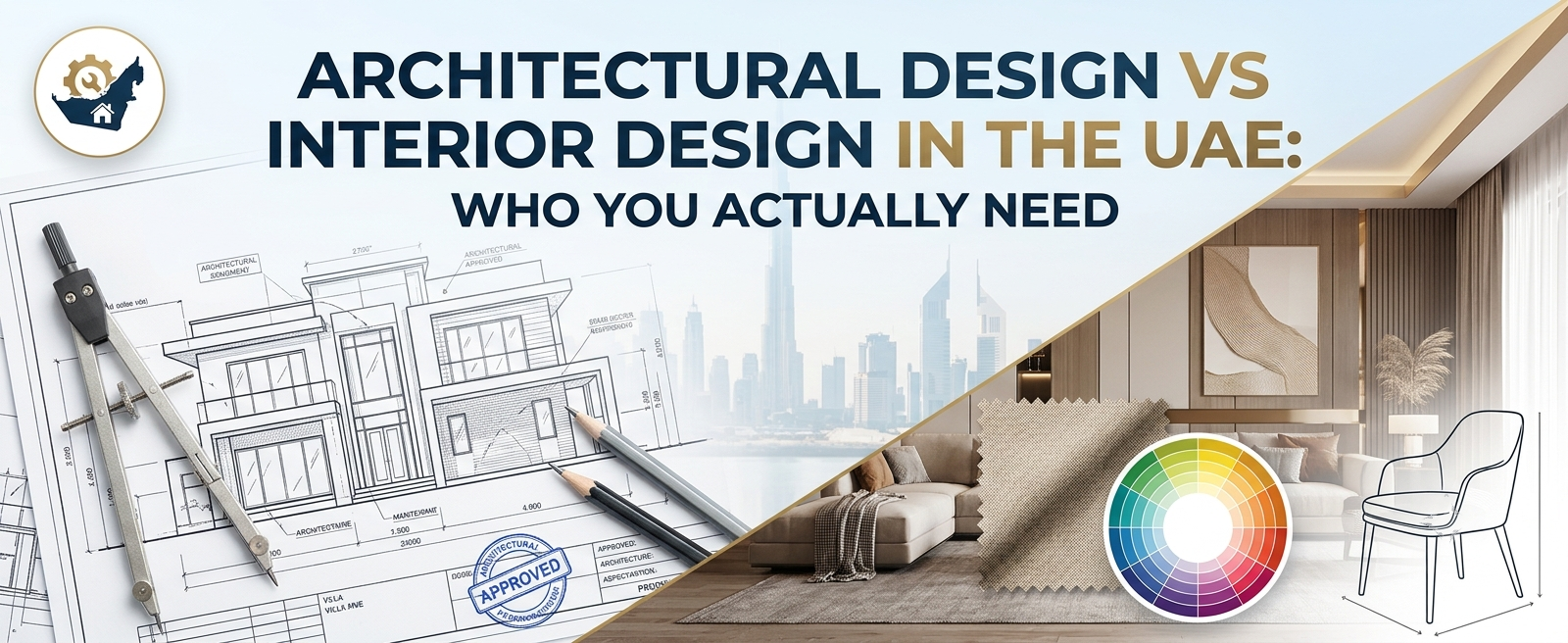
The most expensive sentence in a UAE renovation is “we’ll sort the approval later.”
Here’s how it usually plays out. The marble is ordered. The new layout is agreed over coffee. Then someone asks who approved moving that wall, and everything stops.
The root cause is usually simple: the wrong professional, or one without the right licence. Architectural design and interior design sound close, but the UAE treats them as two different jobs.
Here’s the difference between architectural design and interior design in the UAE, and exactly where the line sits, so you only pay once. By the end you’ll know who to hire, what paperwork to expect, and what to ask before you sign.
Architecture Decides What Can Exist. Interior Design Decides How It Lives.
An architect shapes the building and its regulated shell: form, layout, façade, structural coordination, and the drawings that get it approved.
An interior designer takes an approved space and makes it work: partitions, finishes, lighting, joinery, furniture, and the feel of the place.
Don’t mistake interior design for decoration. In Dubai it sits inside engineering consultancy, as the next section shows.

| Architectural design | Interior design | |
|---|---|---|
| Scope | Form, layout, façade, structure, compliance, construction drawings | Space planning, finishes, furniture, lighting, joinery, user experience |
| Permit trigger | Part of the main building permit process | Often a fit-out permit |
| Dubai activity code | 742170 | 742110 |
| Qualification | Bachelor of Architecture; 5 to 10 years by project scale | Architecture or interior design engineering degree; 5 years |
| Core question | Can this building exist safely and legally? | How should this approved space work and feel? |
Quick test: if the work changes what the building is, think architect. If it changes how the space feels and functions, think interior designer.
How the UAE Draws the Line in Writing
Dubai Municipality lists Architectural Design Consultancy and Interior Design Engineering Services as separate licensed activities. Each has its own code and entry requirements. A licence for one doesn’t automatically cover the other, so check the exact activity.
Architects also climb a ladder: Architectural Engineer, Senior, and Chief, at 5, 7 and 10 years’ experience. Engineers must also register with the Society of Engineers – UAE and pass Dubai’s technical proficiency tests.
How to check a firm before you sign:
- Ask for the trade licence and confirm the listed activity matches your job.
- Ask for the engineer’s Society of Engineers – UAE registration.
- Ask for similar projects at your scale.
- Get all of it confirmed in writing.
Where “Just Interiors” Stops Being Just Interiors
Fit-out is where the two professions overlap, and where most surprises live. In a DDA-regulated area, fit-out works need a DDA Fit-Out Permit, followed by completion approval.

How the process runs:
- Appoint a licensed contractor and get the appointment letter.
- Register your tenancy (EJARI) and get a landlord NOC.
- Collect any NOCs from other relevant authorities.
- Submit approved, stamped drawings with the application.
- Finish within the 6-month permit validity.
- Get Dubai Civil Defence completion, then the Fit-Out Completion Certificate.
Now the red line. If your work adds structural elements, changes the use, or adds gross floor area, it’s no longer ordinary fit-out. It needs a Building Modification request, which means an architect and engineer come first.
Example: you lease an office and want a glass-walled meeting room. That’s interior design territory: landlord NOC, stamped drawings, licensed contractor. Now add a mezzanine above it. That adds floor area, so you’ve moved into Building Modification, and the architect is now in charge.
Even “interior decoration” can be regulated. Dubai Municipality has a separate self-permit circular for it, depending on scope.
Before you approach anyone, build a shortlist. AddressGuru UAE, a business directory, lets you browse architecture and interior design companies by category and location. Then run the four checks above on each name.
It’s Not the Same Rulebook in Every Emirate
Everything above is Dubai. The UAE isn’t one rulebook, so here’s the quick map:
- Dubai: Dubai Municipality or the DDA, depending on where your unit sits. Tenancies are registered through EJARI.
- Abu Dhabi: Building permits and fit-out NOCs are submitted through the TAMM platform, run with the Department of Municipalities and Transport (DMT). Residential tenancies are registered under Tawtheeq.
- Sharjah and the northern emirates: Each has its own municipality, so confirm the process locally before design starts.
- Free zones: They can add their own approvals, such as the DIFC Authority’s fit-out permit for offices and retail.

The fix: before you hire anyone, ask which authority approves your project and whether the designer has worked with it before.
How the Architect and Interior Designer Work Together, Stage by Stage
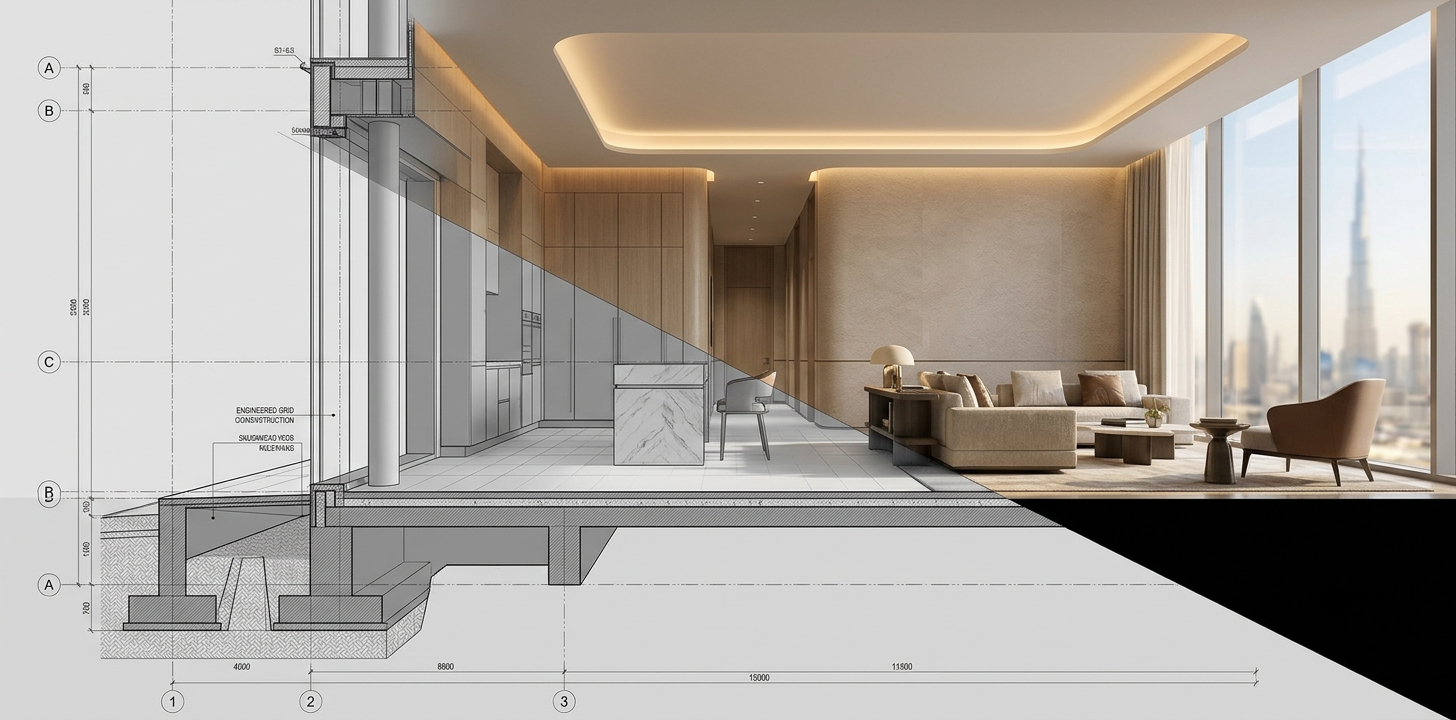
| Stage | Architect leads | Interior designer leads |
|---|---|---|
| Concept | Building form, layout, structure | Mood, brief, early space plan |
| Approvals | Building permit drawings, structural coordination | Fit-out drawings for stamped submission |
| Build | Structure, façade, services coordination | Joinery, finishes, lighting |
| Handover | Compliance sign-off | Snagging and final finishes |
The handoff is where projects leak money. If the interior drawings don’t match the approved architectural set, someone redraws and resubmits.
Which One Do You Need? A Quick Decision Matrix
| Your project | Start with | Hidden risk | Common misconception |
|---|---|---|---|
| New villa or extension | Architect, with the interior designer on the same drawings | Interiors planned after the structure is fixed, so clashes and rework | Interiors come later, so hire later |
| Moving or removing walls | Architect or engineer | Structural change triggers Building Modification | It’s just a partition |
| Apartment refresh | Interior designer | Landlord approval still needed | Cosmetic work needs no permission |
| Office, retail, F&B or clinic | Interior designer plus licensed contractor | Authority NOCs add weeks | The landlord’s OK is enough |
| Changing a unit’s use | Architect | Counts as modification, not fit-out | Same space, same rules |
Cost-to-value: A coordinated team costs more upfront than one freelancer. Rework costs more than that. If one firm can’t do both, make sure the two teams work from one set of drawings.
Long-term scalability: If you may expand later, tell the architect on day one. Leaving room in structure and services is cheap now and painful later.
What Goes Wrong, and the Workaround
Standard approaches fail because everyone assumes someone else owns the approvals. Name one owner in the contract. Then watch for these:
- Designing before checking the structure. You get an open-plan dream and a load-bearing wall. Workaround: get approved drawings from the landlord or developer first, and an engineer’s view before you freeze the design.
- A late landlord NOC. Work can’t properly start without it. Workaround: request it in writing at concept stage.
- The permit clock running out. Six months disappears fast when materials are delayed. Workaround: order long-lead items early and ask the contractor for a dated schedule.
- An unlicensed contractor. The application needs the appointment letter, so a bad contractor stalls everything. Workaround: verify the licence before you appoint.
- A vague quote. “Interior design” may not include the drawings the authority needs. Workaround: make the quote list deliverables: concept, technical drawings, stamped submission.
- Skipping completion. Without Civil Defence sign-off and the completion certificate, the project isn’t formally closed. Workaround: make completion a payment milestone.
The Bottom Line
Architects design the city’s shell. Interior designers design life inside it. In the UAE, both work inside a compliance system.
Before you hire anyone, ask three questions:
- What’s changing? Structure, use or area means architect first. Finishes and layout means interior designer.
- Who holds the right licence? Check the activity, not just the brand.
- Who owns the approvals? Put a name on it.