

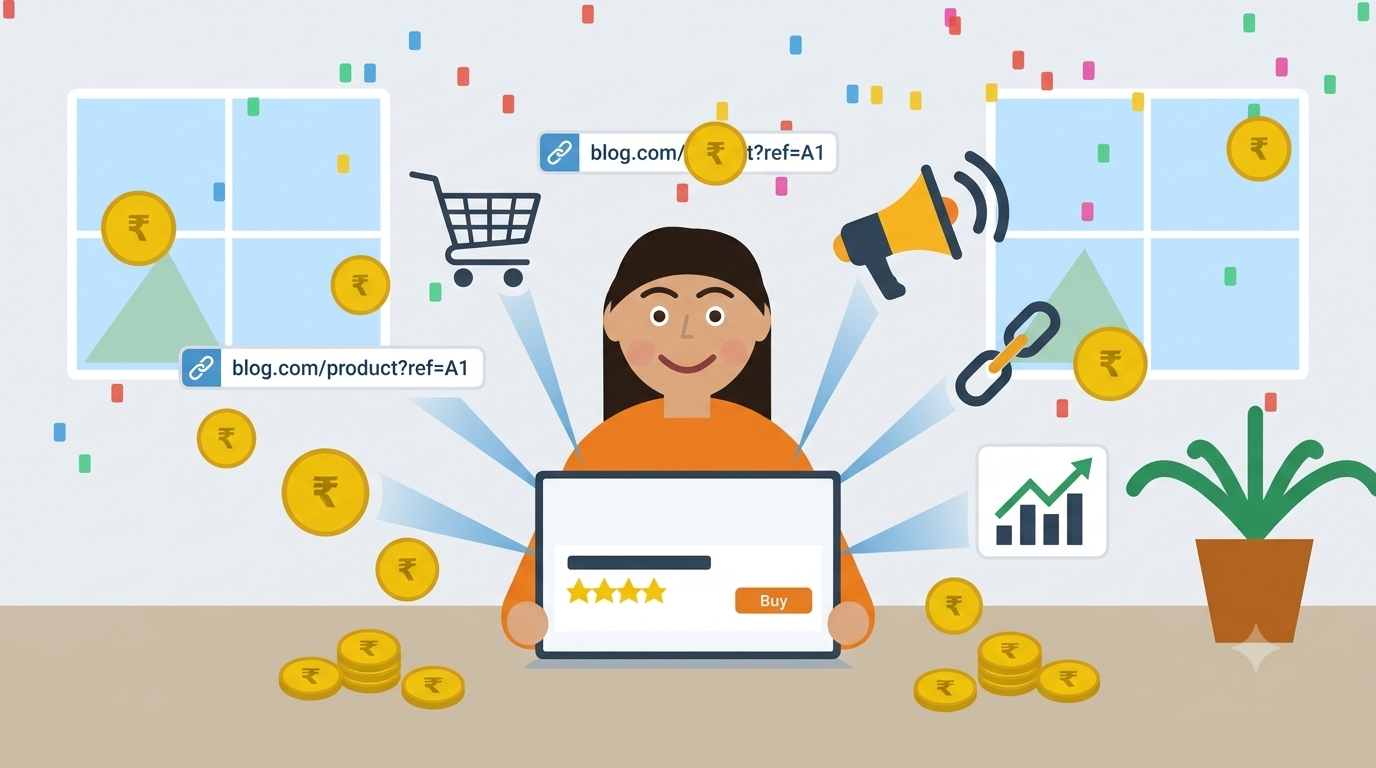
You’ve probably seen it before: a product review, a YouTube video or a blog post where someone recommends something and shares a special link. If you buy through that link, the person who shared it earns a little money. That’s affiliate marketing in action.
It’s one of the most popular forms of performance marketing online. Businesses use it to win new customers, while bloggers, content creators, influencers and website owners use it to earn money from what they publish.
There’s more going on behind the scenes than most people expect. Who actually gets paid? Does the affiliate network take a cut? Does the customer pay extra? And what if someone clicks the link but doesn’t buy until later?
What Is Affiliate Marketing?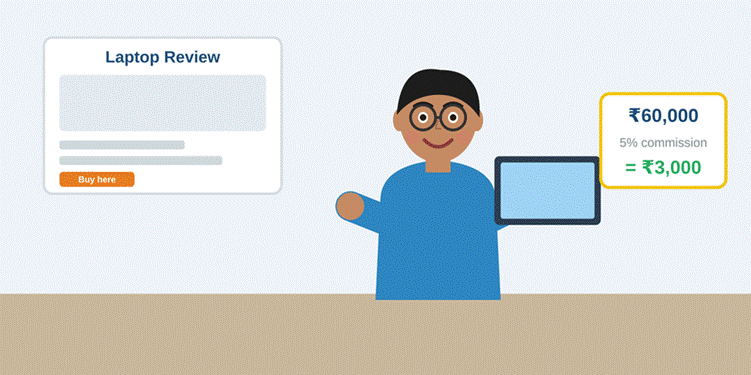
Affiliate marketing is a business arrangement where one person or company promotes another business’s products or services and earns a commission when the people they refer take a specific action.
The business is usually called the merchant or advertiser. The affiliate promotes its products, but the merchant generally pays only when there’s a measurable result, such as a sale, a qualified lead or a new subscription.
Say you’re a tech blogger and you review a laptop that costs ₹60,000. At the end of your article you add a special link. A reader clicks it and buys the laptop. If your programme pays 5% commission, you earn ₹3,000.
The customer pays the retailer, who fulfils the order. You’re paid your commission according to the programme’s rules.
Who Is Involved in Affiliate Marketing?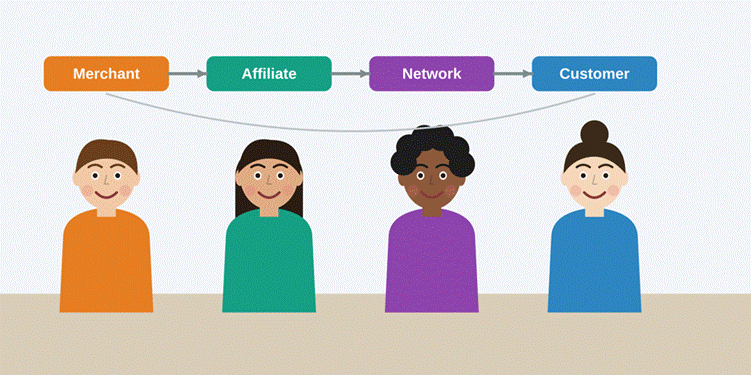
There are usually four parties involved. Knowing what each one does makes it much easier to follow the money.
Merchant / Advertiser
This is the business that owns or sells the product or service. It could be an online retailer, a software company, a hotel, an insurer or an education platform. The merchant creates the affiliate programme, decides how much commission to offer and pays for qualified referrals.
Affiliate / Publisher
The affiliate promotes the merchant’s products through a website, blog, YouTube channel, social media, newsletter and so on. They earn commission when the people they refer complete the required action.
Affiliate Network
A network connects businesses with publishers. It usually handles tracking, reporting and programme management, and sometimes payments too. Awin, CJ Affiliate and Impact are well-known examples.
Not every programme needs a network. Some businesses run their own affiliate relationships directly.
Customer
The customer finds the product through the affiliate’s recommendation and takes an action, usually buying. They normally pay the merchant directly.
How Does It Work? A Simple Example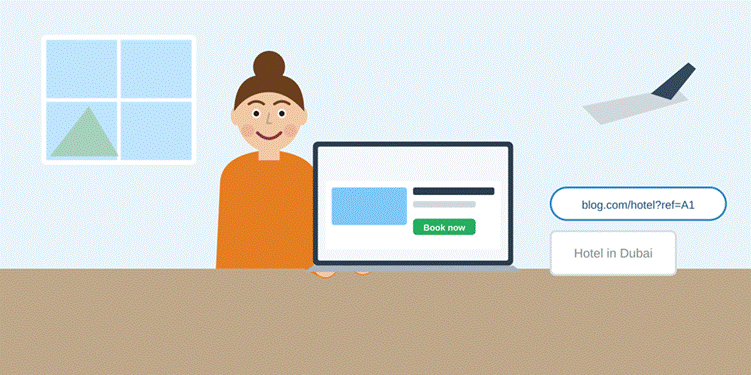
Imagine a travel blogger writing about the best hotels in Dubai. One of those hotels has an affiliate partnership through a booking platform.
The blogger signs up, gets a unique tracking link and adds it to the article. A reader clicks the link and books a room. The tracking system recognises that the booking came from the blogger’s link, so the blogger earns commission, as long as the booking meets the programme’s rules.
In general, the process looks like this:
1. The business sets up an affiliate programme and decides how much commission to pay.
2. The affiliate signs up and gets approved.
3. The affiliate receives unique tracking links or codes.
4. The affiliate creates useful content that includes those links.
5. A customer clicks a link.
6. The tracking system records the referral.
7. The customer makes a purchase or completes a qualified action.
8. The merchant or network validates the transaction.
9. The affiliate receives the approved commission on the payment schedule.
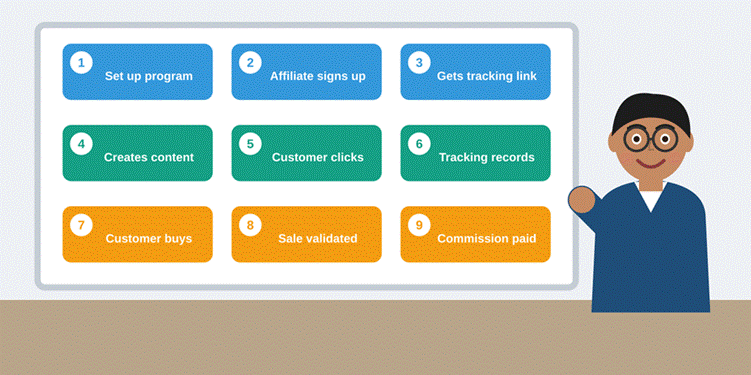
Remember, the affiliate is only paid if the customer completes a qualified action.
Who Pays Who?
This is probably the most important part to understand. The merchant pays commission because the affiliate helped bring in a customer or another valuable result. In most cases:
• The customer pays the merchant for the product or service.
• The merchant keeps the sale and pays commission to the affiliate.
• The affiliate earns commission for the qualified referral.
• The affiliate network may receive a fee from the merchant.
Here’s an example: A product costs ₹10,000 and the affiliate earns 10%. The customer pays ₹10,000 to the retailer, who records the qualified referral and pays the affiliate ₹1,000. If a network runs the programme, it may charge the merchant a fee for using its platform.
The affiliate often doesn’t get paid straight away. The merchant will usually validate the transaction and wait for the return period to end before approving the commission.

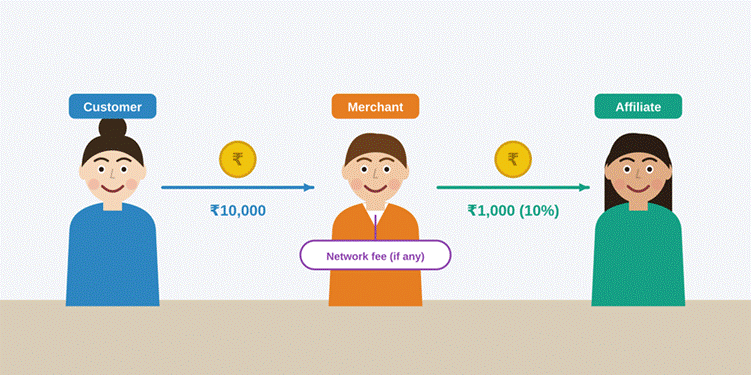
So does the customer pay extra for using an affiliate link? Generally, no. The price is the same, and sometimes the merchant even offers a special discount as part of the promotion.
How Do Affiliates Get Paid?
Merchants pay affiliates in different ways, depending on what they sell and the kind of customer they want.
Pay Per Sale (PPS)
One of the most common models. The affiliate earns a percentage of the purchase price, or a fixed amount, for every qualified sale. For example, if a fashion retailer pays 8% on a ₹5,000 order, the affiliate earns ₹400.
Pay Per Lead (PPL)
The affiliate is paid when someone completes a specific lead action, such as submitting an enquiry, requesting an insurance quote, signing up for a webinar or booking a consultation. The person doesn’t need to buy anything.
Pay Per Click (PPC)
The affiliate is paid for every valid click on their links. This is much less common in affiliate programmes.
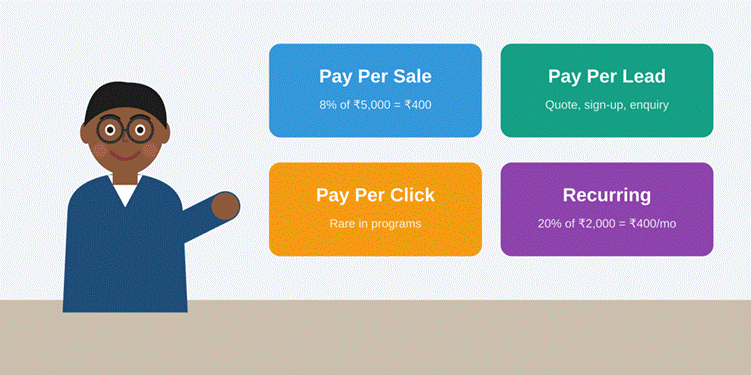
Recurring Commission
This works well for software companies and subscription businesses. If an affiliate refers a customer to a platform that costs ₹2,000 a month, a 20% recurring commission would earn them ₹400 every month. Some programmes pay for as long as the customer stays subscribed, while others stop after a set period. It all depends on the programme’s rules.
How Are Sales Tracked?
Tracking is the backbone of affiliate marketing. Without it, a business can’t tell which partner sent a customer.
Most programmes use unique tracking links that contain an affiliate code. When someone clicks the link, the system records the referral using cookies, first-party identifiers or other tracking methods.
One thing worth knowing is the attribution window, which is the period during which a referral still counts towards commission. Suppose a programme has a 30-day window. A customer clicks the affiliate’s link on 5 October but doesn’t buy until 20 October. The affiliate can still be paid, depending on the programme’s rules.
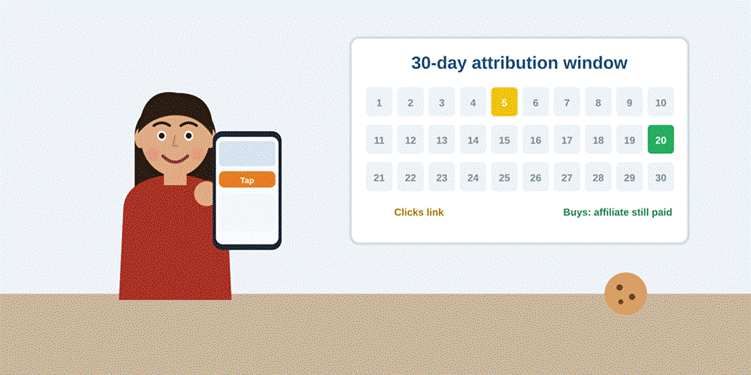
Tracking isn’t perfect, though. Customers switch devices, block cookies, clear their browsers or click another affiliate’s link. Always read a programme’s terms and conditions on tracking and attribution.
Can Multiple Affiliates Get Paid for the Same Customer?
That depends on the merchant’s rules. Many programmes use last-click attribution, which means the last qualified referral gets the commission. Others split it, and some campaigns pay several partners.
For instance, one affiliate might introduce a customer through a product review and another might close the sale with a promotion. Depending on the tracking rules, either or both could be paid. If you plan to run an affiliate business, it’s worth knowing this before you start.
What Do You Need to Become an Affiliate Marketer?
You don’t necessarily need a business, a product or a big following. You need a way to reach an audience and useful information that helps people decide what to buy. Common ways to start include:
• Building a niche website or blog.
• Writing product reviews and comparisons.
• Starting a YouTube channel.
• Sharing educational content on social media.
• Running an email newsletter.
• Publishing destination guides and travel recommendations.
Pick a niche to focus on. Technology, travel, personal finance, education, beauty and home improvement all have affiliate partnerships.
Simply dropping in lots of links rarely works. People trust recommendations that are relevant, helpful and clearly come from someone who knows the product.
Be open about your relationship with the merchant, too. A simple line such as “We may earn a commission if you buy through links in this article” lets readers know. Depending on your country and platform, there may be rules about disclosure, so check what applies to your audience.
Is It Profitable for Businesses?
Affiliate marketing can be a valuable extra channel for winning new customers. You don’t pay for every ad impression. You can set the programme up so you only pay when someone buys or becomes a lead.
It also lets smaller companies work with niche bloggers, specialist websites and creators whose audiences already fit their market.
It isn’t risk-free, however. You’ll need to check the quality of referrals, guard against fraud, pay commissions on time and make sure affiliates describe your products accurately.
The commission also has to make financial sense. If you sell a low-margin product, you can’t offer the same percentage as a software company with recurring subscription revenue.
The best programmes give affiliates a real incentive to work with you while keeping the numbers healthy for your business.
Final Thoughts

Affiliate marketing works because it connects businesses with people who can help them sell. The merchant gains a customer, the affiliate earns a commission, the network may earn a fee, and the customer gets the product or service they wanted.
In most cases the money comes from the customer and goes to the merchant, who then pays the affiliate and the network (if there is one).
It’s a simple process, but it depends on trust, accurate tracking and recommendations people find helpful. For businesses, it creates a sales channel where you pay for results. For publishers and creators, it’s a way to earn from the audience they’ve built.
In the end, affiliate marketing isn’t just about linking to products and collecting commission. It’s about matching the right customer with the right product and creating value for everyone involved.